
Reading the Commonwealth government’s Closing the Gap Annual Report for 2025 is a very mixed experience. Excellent progress in some domains sits alongside unchanged or worsening outcomes in many others, presenting a complicated picture of Aboriginal and Torres Strait Islander people’s lives.
It is excellent that remote Aboriginal and Torres Strait Islander communities across Australia are receiving funding for local projects, requested by the communities, that will create 1,700 jobs. The Commonwealth Indigenous Rangers Program is being expanded, with 900 jobs across 82 ranger projects that protect and sustain traditional lands and waters. The proportion of Aboriginal and Torres Strait Islander children enrolled at a preschool has increased from 61 per cent in 2016 to 94 per cent in 2024.
These are a few of the positive achievements described in the report, released in February, which outlines the Commonwealth government’s progress towards its commitments under the National Agreement on Closing the Gap, across domains including health, education, economic participation, housing, environment, justice and culture. The report also documents overall progress that combines State and Territory responsibilities as well as national outcomes.
It is valuable to focus on the positive achievements, because they highlight elements of success that can be applied in other domains. They show that co-design with Indigenous communities, and delivery through Indigenous community-controlled agencies, are essential.
During the past year the Indigenous and Remote Eye Service (IRIS) program provided 445 sight-saving cataract surgeries for First Nations people across the Northern Territory. Crucially, the procedures are conducted in collaboration with Aboriginal Community Controlled Health Organisations (ACCHOs), in facilities where all staff are trained in culturally responsive care.
Respectful co-design means government investments can be directed towards genuine community priorities. The Commonwealth will spend $20 million by 2028 to expand free Wi-Fi in remote Indigenous communities. The communities themselves will shape the rollout by directing it first towards the areas they recognise as having the greatest need for broadband internet.
With such demonstrable successes, and clear signposts for how to achieve them, it is disappointing that in some domains achieving the Closing the Gap targets seems further away than ever.
The rate of incarceration of Aboriginal and Torres Strait Islander adults was supposed to be reduced by at least 15 per cent between 2019 and 2031. In fact, imprisonments surged in 2024 – up by 13 per cent in just a year. Meanwhile the rate of Indigenous children in juvenile detention has ticked back up again after reducing substantially between 2018 and 2021 and is currently 26 times higher than for non-Indigenous children.
The proportion of Aboriginal and Torres Strait Islander children in out-of-home care has increased from the 2019 baseline, meaning there has been no progress towards the goal of reducing the gap between Indigenous and non-Indigenous child removals by 45 per cent by 2031, and in fact a worsening of this indicator.
Meanwhile the proportion of Aboriginal and Torres Strait Islander children assessed as developmentally on track in five key areas was meant to increase to 55% by 2013 but instead has fallen to 34 per cent from 35 per cent in 2018.
However, the report also showcased the Connected Beginnings Lutruwita program in Tasmania, which massively improved outcomes for the youngest children since its delivery transitioned to the Tasmanian Aboriginal Centre. The proportion of children considered on track in their physical health and wellbeing increased from 44% to 78%; social competence from 54% to 63%; and language and cognitive ability from 50% to 59%. They achieved these outcomes by providing the program alongside other support services that are culturally safe for families.
The final Closing the Gap indicator in which progress is going backwards is social and emotional wellbeing. The target is to reduce the suicide rate towards zero. Instead, suicides of Aboriginal and Torres Strait Islander people have increased, and now occur at three times the rate of other Australians.
At the Centre of Best Practice in Aboriginal and Torres Strait Islander Suicide Prevention, we develop and implement suicide-prevention strategies with Indigenous communities, and we know these interventions are effective in building strength, resilience and help-seeking. But they remain limited in what they can achieve while Indigenous people’s lives are affected by ongoing injustice and systemic racism.
Aboriginal and Torres Strait Islander people’s experience of health, and mental health, is deeply interconnected with family, community, Country and culture, and influenced by historical, political and social determinants. Our rates of psychological distress and suicide are inevitably driven by the losses and traumas we share when children are taken away, or when men, women and children are detained and imprisoned at unjustifiable rates.
Successes in some domains can be undermined by inaction in others. These devastating figures show that we need governments in all jurisdictions to take their commitments seriously across all the Closing the Gap outcomes.
Community-based solutions are effective in land management, employment opportunities and early-childhood education. We also need programs, designed, implemented, led and governed by Aboriginal and Torres Strait Islander people, to turn around the crises in the criminal justice and out of home care systems.
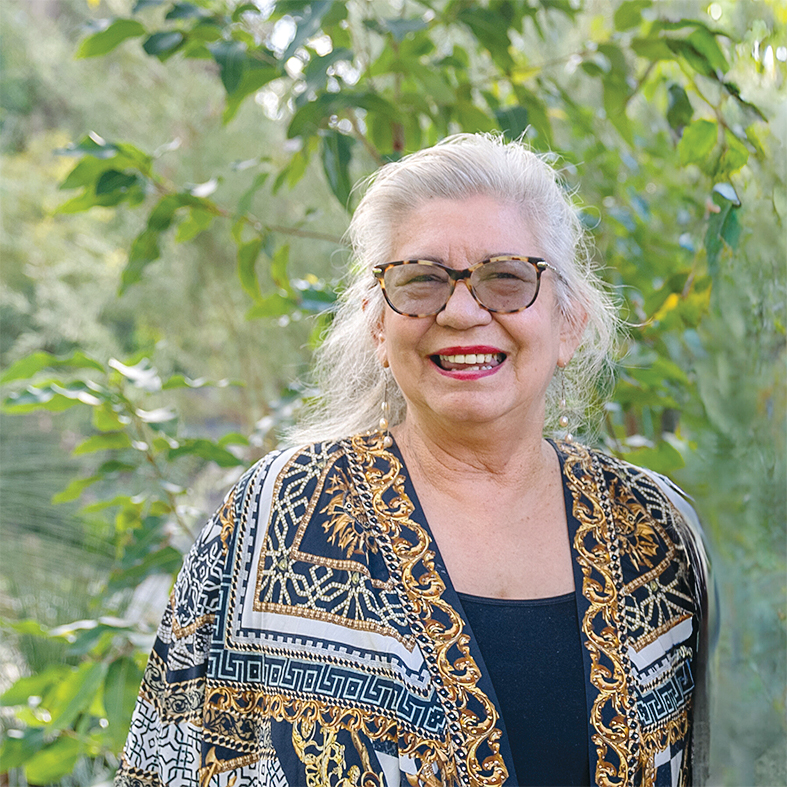
Professor Pat Dudgeon AM is a Bardi woman from the Kimberley region of Western Australia. She is Australia’s first Aboriginal psychologist, Director of the Centre of Best Practice in Aboriginal and Torres Strait Islander Suicide Prevention (CBPATSISP) at the University of Western Australia and founding Chair of the Australian Indigenous Psychologists Association (AIPA).