Book charts the history of Aboriginal legal services
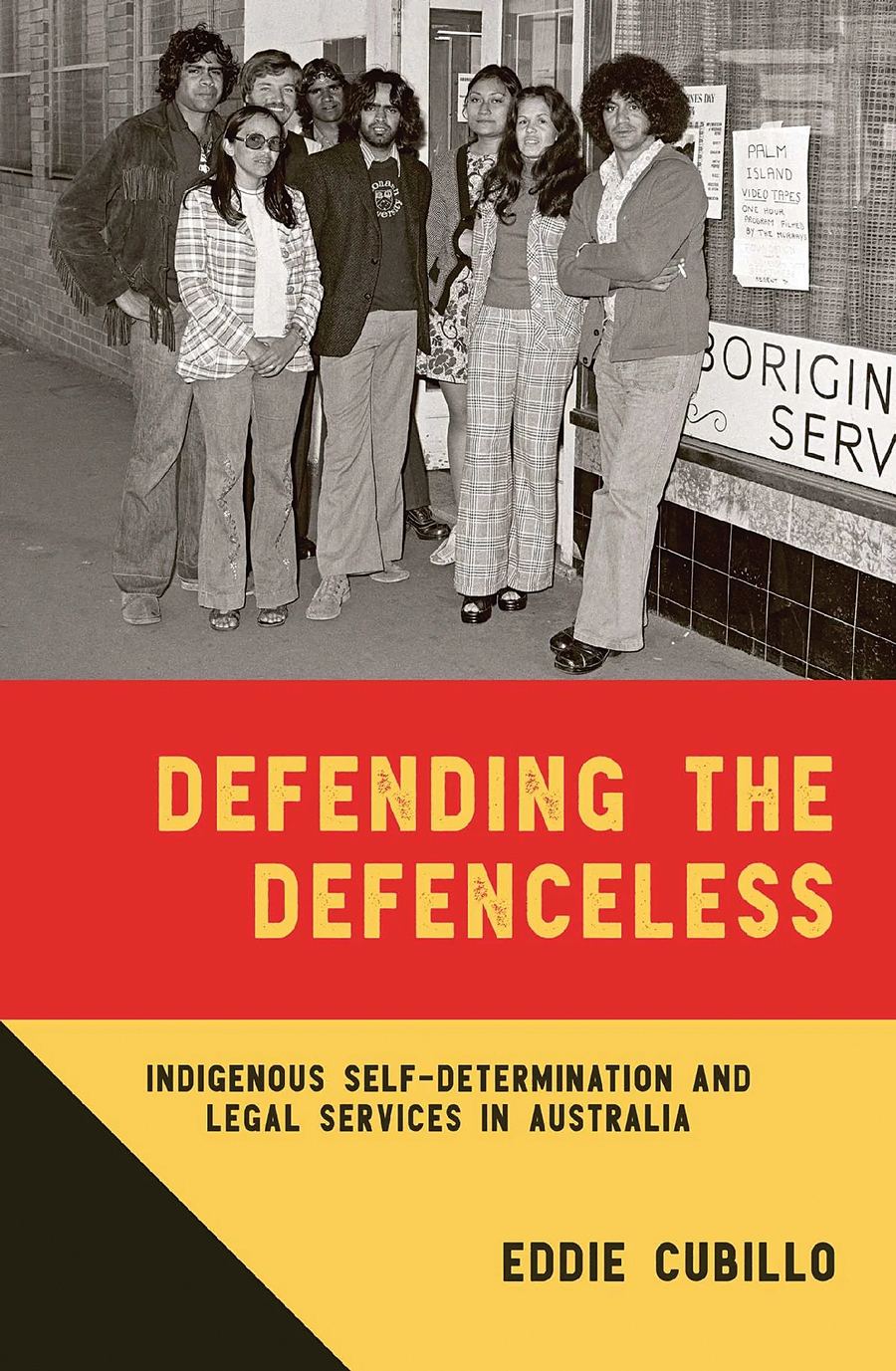
Professor Eddie Cubillo has documented the long history and important role of the Aboriginal Legal Services in a new book, Defending the Defenceless.
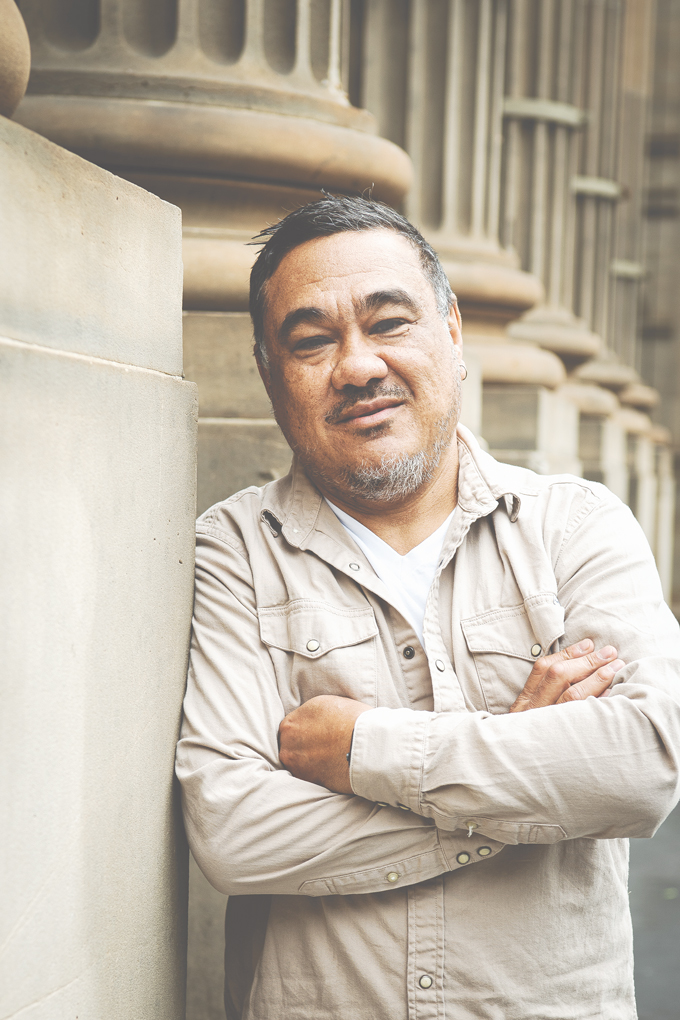
Eddie Cubillo
Professor Eddie Cubillo has documented the long history and important role of the Aboriginal Legal Services in a new book, Defending the Defenceless.
Dr Cubillo told the Koori Mail that part of his motivation for writing the book was to highlight the vital role the Aboriginal Legal Services have in serving the community, and counter some of the negative feedback the services attract.
“I was a former chair of the North Australian Aboriginal Justice Agency, and I was thinking that they get a lot of bad publicity,” he told the Koori Mail.
“When if it wasn’t for them, we wouldn’t have actually made inroads into the communities up there. And these are some of the things that aren’t captured by the wider public on our legal services. And so I wrote about that.”
A proud descendant of the Larrakia, Wadjigan and Central Arrernte peoples of the Northern Territory, Dr Cubillo has worked as a tireless advocate for First Nations justice over many decades.
His roles have included the anti-discrimination commissioner of the Northern Territory, executive officer with National Aboriginal and Torres Strait Islander Legal Service (NATSILS) and director of community engagement with the Royal Commission into the Protection and Detention of Children in the Northern Territory.
“I was sort of burnt out from everything that went down at the Royal Commission, late nights, hearing all the stories we’ve heard from our own families, re-hearing stuff that as a practitioner that you, yourself, have experienced as an Indigenous person,” Cubillo said.
With encouragement from Euahleyai / Gamillaroi scholar Larissa Behrendt, distinguished professor at the Jumbunna Institute at the University of Technology Sydney, Cubillo completed his PhD, on which his new book is based.
Defending the Defenceless not only examines the important role of the Aboriginal Legal Services in the present day but also recounts the formation of the organisation in 1970, when Aboriginal community members in Redfern were subjected to arbitrary arrests and police violence.
In his foreword to Dr Cubillo’s book, Gumbaynggirr professor Gary Foley explains how the idea for the Aboriginal Legal Services was initially inspired by the political consciousness the young activists experienced after meeting African American soldiers on leave in Sydney from the Vietnam War.
Professor Foley talks about the impact of the Black Panthers’ ‘Pig Patrols’, a method by which members of the group would follow and intervene in police arrests of African American community members in Oakland, California.
As professor Foley writes, “our version of the Pig Patrol would consist of small groups of activists following police in Redfern, monitoring and recording as much of their activities as possible.”
“We eventually approached members of the legal profession with our idea to open a shopfront, free legal-aid centre in Redfern.”
In 1970, the first Aboriginal Legal Service (ALS) was established, and today, the service operates in each state and territory.
Dr Cubillo said that the establishment and continued work of the ALS should be something to celebrate and not always simply criticise.
“If you haven’t worked in one you really don’t understand the pressures and the hard work people do,” he said.
“It’s not a model that comes from government or a quasi-review or a Royal Commission. People saw the need and they went and done it. And I think that’s what underpins the whole of the ALS. It’s the oldest Indigenous body in the country.”
However, as Dr Cubillo discusses in Defending the Defenceless, Aboriginal Legal Services continue to face an uphill battle in combatting the ever-increasing incarceration, deaths in custody and child removal rates impacting First Nations peoples.
As of 2026, First Nations peoples make up 37 percent of Australian prisons, despite being less than four percent of the total population. This statistic is even higher for children and young people, driven in part by ongoing high rates of child removal.
And since the 1991 Royal Commission into Aboriginal Deaths in Custody, more than 600 First Nations peoples have died in custody.
As Dr Cubillo discusses in his book, these increasing numbers are driven by failure of governments to implement decades of recommendations, structural inequality and racism, a lack of funding for community services and restrictions on how government funding can be utilised.
He says that the Aboriginal Legal Services should have the opportunity to reflect on the way they operate to better face the challenges of working within a legal system stacked against them.
“They are just flat out all the time and they’re doing their best in the timeframes and with the money they have, to make sure that they are connecting the community,” he said.
“But really, I don’t think really anyone’s had the time to just really pull up and say, ‘hey, we need to really sit down and work out how we connect to our communities’. And really sit down and work that out.”
He says that true self-determination means individual nations should be able to speak on their own behalf, rather than at the state level structure of the Aboriginal Legal Services. He says this is even more important given the recent amalgamation of the service in the Northern Territory when, in 2018 the North Australian Aboriginal Justice Agency (NAAJA) in Darwin was combined with the Central Australian Aboriginal Legal Aid Service (CAALAS) based in Alice Springs.
This centralisation follows an ongoing trend. NAAJA was originally formed in 2006 by merging the North Australian Aboriginal Legal Aid Service, established in 1972; the Katherine Regional Aboriginal Legal Aid Service, established in 1985; and the Miwatj Aboriginal Legal Service, established in 1998.
Dr Cubillo is of the view that while these mergers may be economically necessary, they do not truly support self-determination.
“Every nation is different and people are wanting to speak for themselves,” Dr Cubillo said.
“The ALS have to encompass that into their structures. So do all our other organisations, and that’s not easy thing to do. Because we’re all different. We have similarities, but we’re very different. I just think we need to really sit down and try and encompass that in what our structures look like, that represent our communities.”
Having worked in a variety of roles over the course of his career, including as director of Melbourne Law School’s Mabo Centre, Dr Cubillo told the Koori Mail he still faces daily challenges as a First Nations person working in the legal sector.
“It can be really frustrating at times. At one time at the Melbourne Law School, I was the only Indigenous employee. It makes it difficult. I come from Darwin, I didn’t go to sandstone universities,” he said.
However, Dr Cubillo remains motivated to continue to advocate for his people, especially as a father and grandfather, in the hope that his children and grandchildren will not continue to be impacted by the legal and criminal justice systems.
“I got six grandkids now and that’s a big motivation,” he said. “My grandparents did what they did so that I wouldn’t have to go through that. And now, basically we’re going through that same thing, if not worse, with the statistics.”
Defending the Defenceless: Indigenous Self-Determination and Legal Services in Australia, by Dr Eddie Cubillo and with a foreword by Professor Gary Foley, is available now through Melbourne University Publishing.