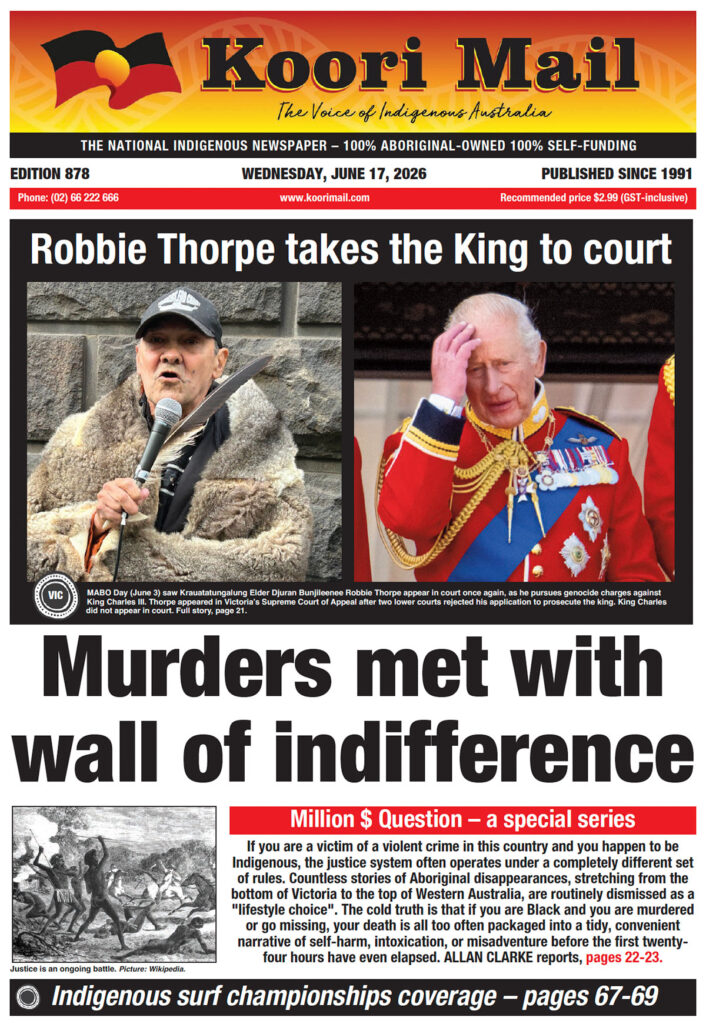
Twin’s fight for justice
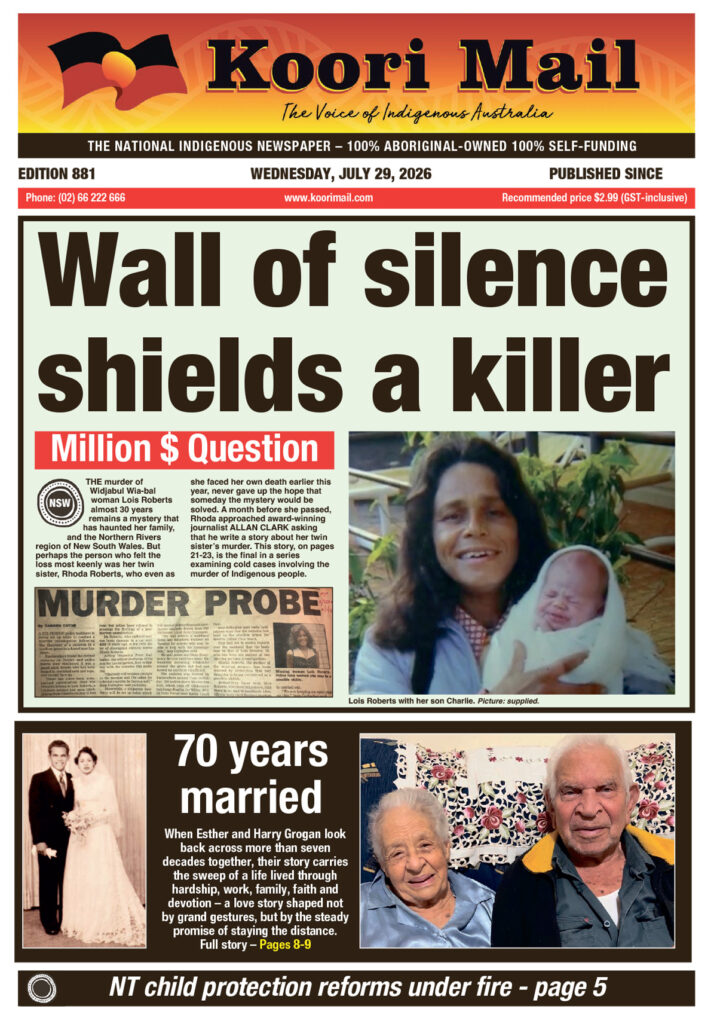
This is the last story in our series Million Dollar Question, written by Allan Clarke.
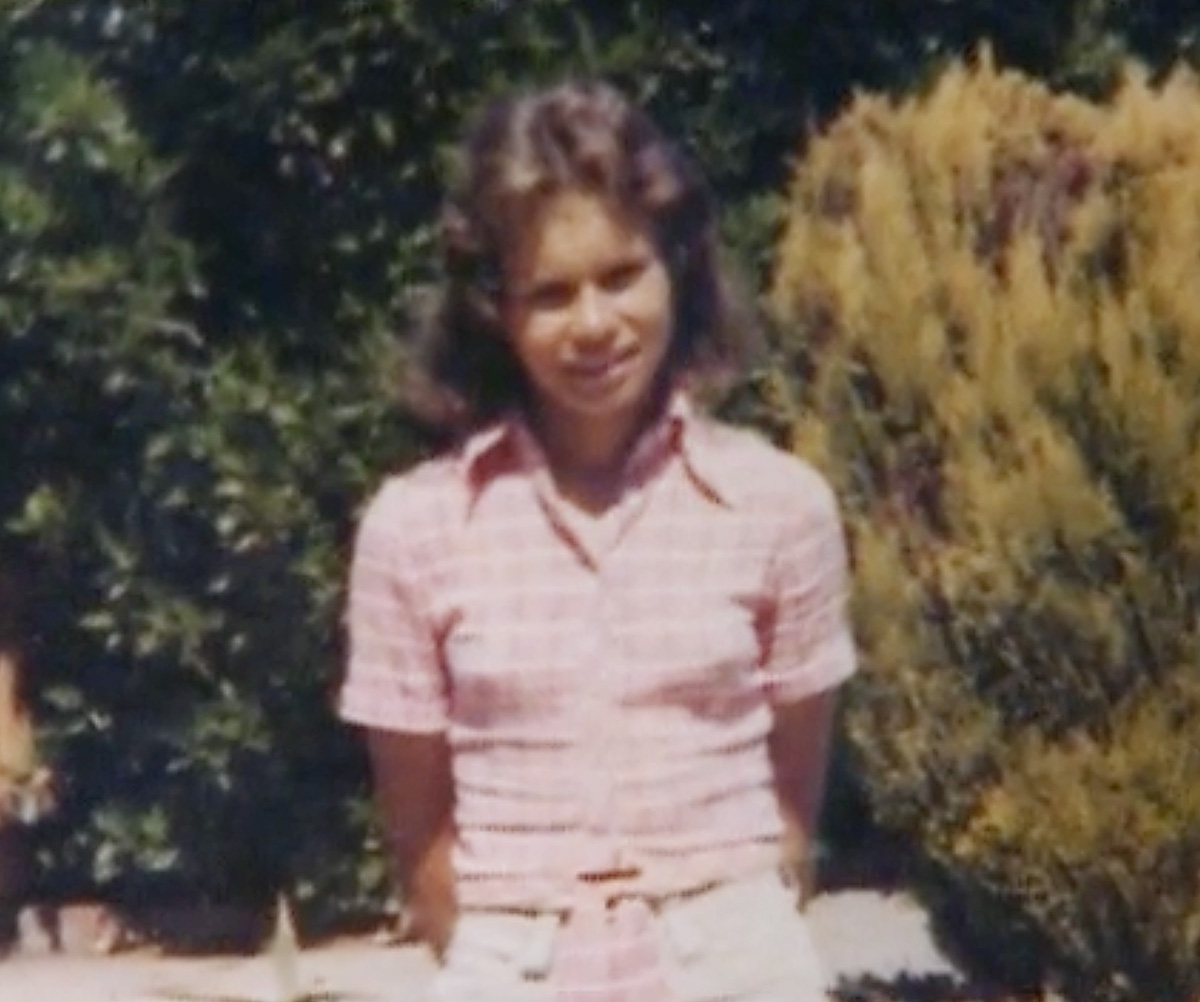
Lois Roberts.
By ALLAN CLARKE
Earlier this year, the Aboriginal and Torres Strait Islander communities – indeed, the entire nation – suffered a profound loss when Rhoda Roberts AO, a deeply proud Widjabul Wia-bal woman of the Bundjalung Nation, passed away.
She was a supernova who altered the Australian cultural fabric, a fierce champion of all the arts, and a tireless fighter for justice and equal rights.
A month before she passed away, I got a call from her out of the blue. In true Rhoda style, she apologised for sounding sick and for being short of breath – she was forever thinking about others. It was clear that she needed to rest, but she felt compelled to ask me to write an article about her twin sister Lois’s unsolved murder.
Her health meant she was unable to give me a final interview, but she wanted me to use the extensive recorded transcripts from interviews we had done together over the years, including from when I worked on NITV’s Cold Justice program. Rhoda wanted her sister’s story told in her words.
The following feature, is the fulfillment of that promise – a promise made to a sister who never stopped fighting, compiled from hours of Rhoda’s own words shared with me.
Question to a killer: ‘Why did you do this to this girl?’
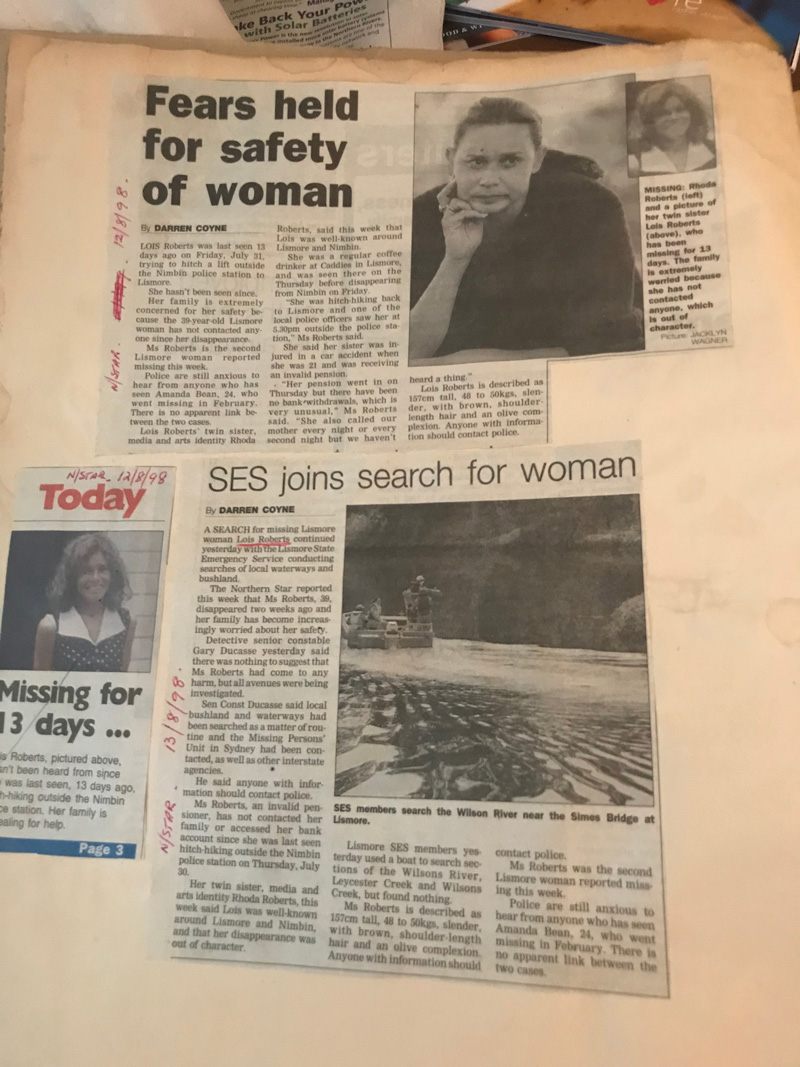
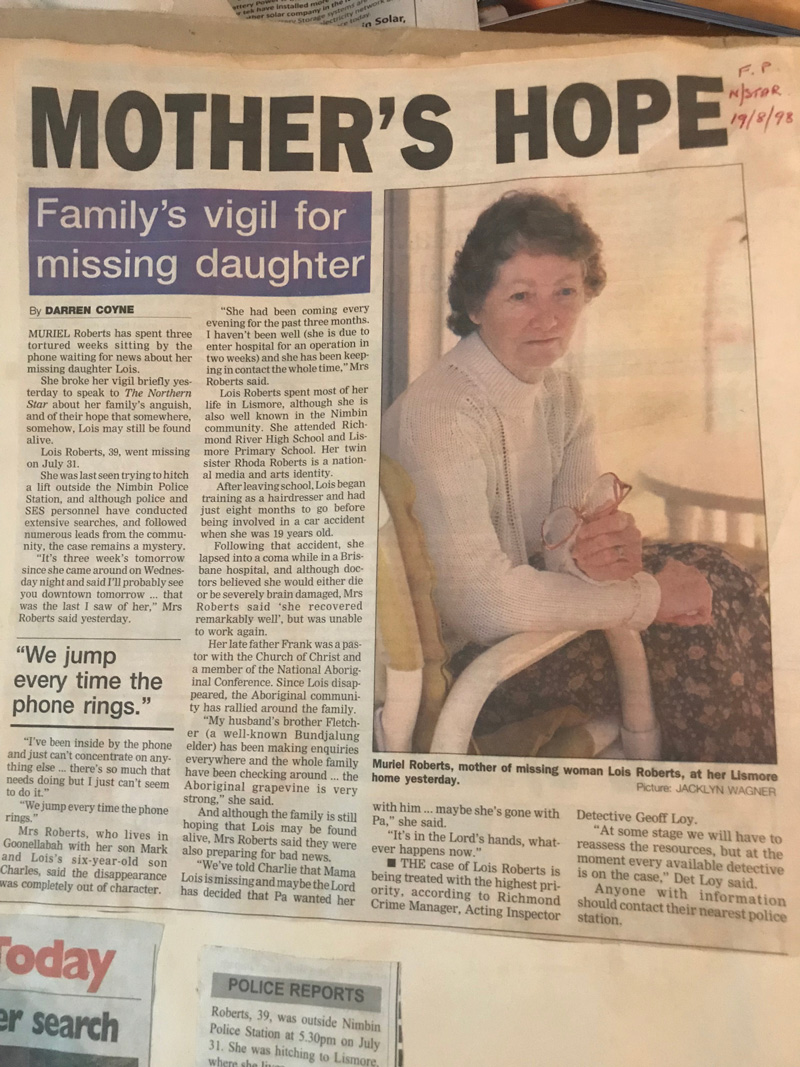
On Friday, 31 July 1998, the life of the Roberts family was violently upended. The winter sun was dipping behind the ridges, casting long, dark shadows across the main street of Nimbin, famed for its alternative lifestyle and hippy roots. Having missed the afternoon bus back to Lismore, 39-year-old mother Lois Roberts stood at the edge of town on Cullen Street, a spot known locally as “Hitchhikers Corner,” located directly opposite the Nimbin Police Station. A local police officer stationed at the window recalled seeing her standing there in the fading afternoon light. Moments later, a witness saw Lois get into a white sedan. It was the last time she was ever seen alive.
When Lois failed to return home, her brother Mark raised the alarm after finding a box of fresh groceries left on her doorstep, a detail that sent an chill through the family. Knowing her, there was no way she would have left fresh food to perish in the sun.
Mark went to the police, but instead of taking him seriously, officers turned their focus onto him. Even though Mark was the one sounding the alarm, he was immediately looked at suspiciously, and police began interrogating him as though he were involved. Rhoda was frustrated and angry that while precious time was slipping away, the police were wasting crucial hours interrogating her brother rather than being out looking for her missing sister.
“Unfortunately, they didn’t take him seriously,” Rhoda recounted. “I do remember going to the police station that first day, and being quite upset with them that they didn’t take my brother seriously, and they made him feel terrible. It was humiliating. They dismissed that he had fears that his sister was missing.”
“The police would still not file a missing person’s report and had the attitude that we were really worrying about nothing. Basically, they said ‘she’s gone walkabout.’
“This is common assumption made about Aboriginal people when they go missing, especially Indigenous women. Simply because of who they are and sadly the police around (Lismore) had that thought, that my sister would simply be someone who didn’t behave appropriately. So, they dismissed it, ‘she’s fairly vulnerable, she’ll go off with a man, she’s probably prostituting or something’, and ‘she’s out there and she’ll come back in a few days. So please don’t waste our time’.”
The Roberts family felt they had no choice but to launch their own investigation, pounding the pavement and searching bushland.
“We literally knocked on every door in Nimbin. And we were able to do her last twenty-four-hour timeline,” Rhoda told me. “So by the time we were convincing the police to put in a missing person’s report, I was able to give them the timeline, and there was a part of me that was sitting there going, I’ve just done your bloody job.”
It was only after Rhoda, who was organising the Indigenous segment for the Sydney 2000 Olympic Games Opening Ceremony, leveraged her high-profile status and threatened a national media campaign using her industry contacts that law enforcement finally issued a public appeal, roughly ten days after Lois vanished.
Widjabul Wia-bal Country, within the Northern Rivers of New South Wales, is a landscape defined by its striking dualities.
The rich volcanic soil feeds ancient subtropical rainforests, and the heavy mist that wraps itself around the mountainous ridges of the Whian Whian is much more than a stunning geographical feature; to the Bundjalung people, it is the the embodiment of their ancestors. This country is steeped in thousands of years of lore, songlines, and kinship. It was here, in the shade of the towering gums and the vibrant community life of Lismore, that twins Lois and Rhoda Roberts were raised.
They were the daughters of the legendary Pastor Frank Roberts Jnr, a renowned civil rights campaigner, and Muriel Roberts. The Roberts home was a crucible of political consciousness, artistic expression, and cultural pride. Raised alongside their brothers Philip and Mark, Lois and Rhoda grew up within a protective web of family, sharing an almost telepathic bond.
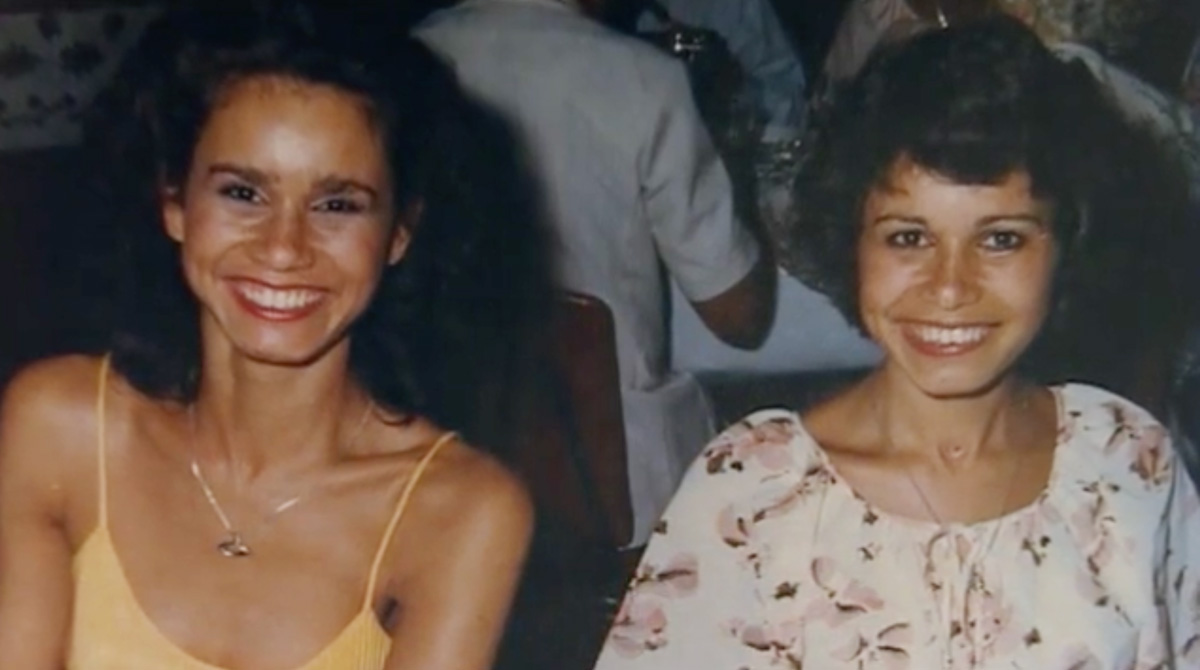
Long before her name became attached to an unsolved murder file, Lois Roberts was a force of nature. Before the accident that divided her life into “before and after”, she was a striking, stylish young woman, a talented local hairdresser with a fierce intellect with a razor-sharp wit, and an effortless, magnetic charisma. She had the world at her feet.
“Lois and I were, I guess, very similar, but also very much chalk and cheese,” Rhoda told me. “She was the outgoing gregarious one. She was the pretty one, and I guess because she was so outgoing, I didn’t have to be. So, I was much quieter, and more studious, but she was smarter.”
The twin bond was central to their identity. “You’re in the womb together for nine months, there is an incredible bond,” Rhoda reflected. “I often used to say to my brothers, after what happened, that they never understood my grief, because it would be different to theirs. And they were like, ‘she was our sister too,’ and I said, ‘yes, but she was my twin.’”
At twenty, that bright, burning light was permanently altered. A horrific car crash on the way to work left Lois in a coma on life support. Doctors warned the family she would never survive, but true to her defiant spirit, Lois fought back and pulled through.
The crash left her with permanent brain damage, altering her cognitive processing and giving her an almost child-like naivety, and, as Rhoda explained, an inability to perceive malice or danger in others.
“Lois was a party animal, you know, we were young, we were twenty years old,” Rhoda remembered. “She was out having a great time, got her licence, going all round the countryside, sadly she had a car accident on the way to work, and it changed everything in our lives. She got brain damage. She was able to live a fairly decent life, but not the life we had expected she would have.”
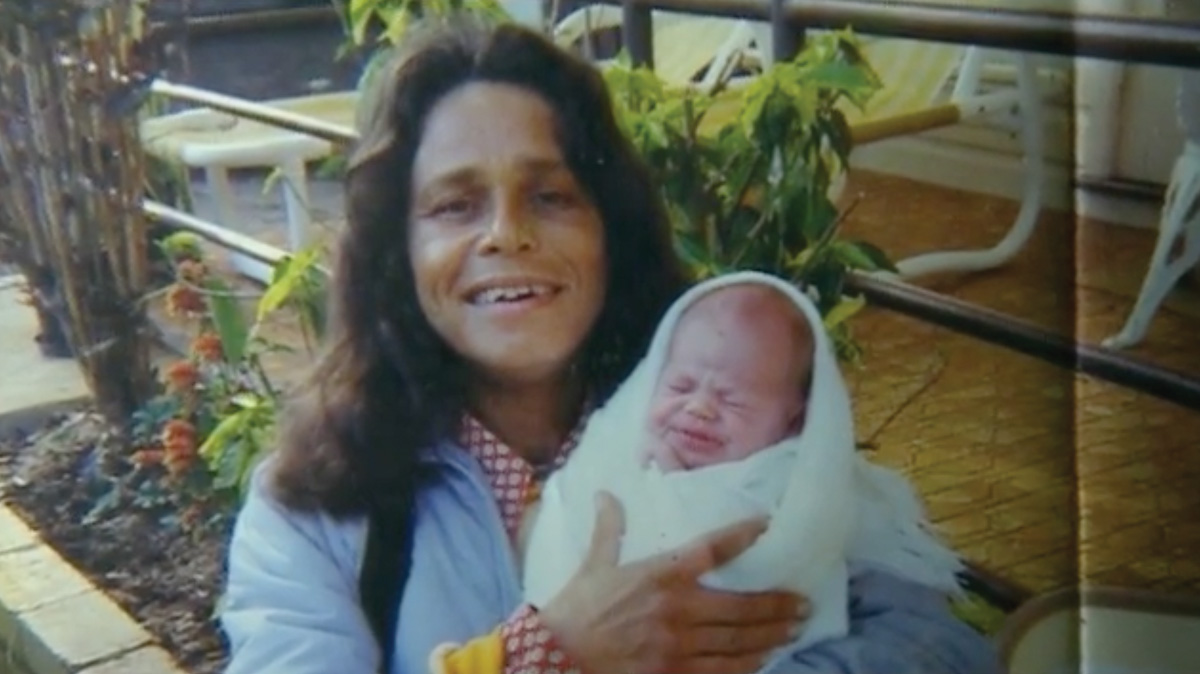
Yet beneath her vulnerability, the old Lois remained fiercely alive. She was a proud mother to her children, Charles and Emily, and maintained her independence. Rhoda recalled a tender moment when she tried to help her sister get ready, “I remember once trying to get her to wear some clothes, we were going out somewhere, and she said ‘I’m not that girl anymore, don’t dress me. I know what I wanna wear.’ And ‘cause she’d changed, it took many years to realise she still was that shining star, it was just different.”
Seeking a place where her differences would be embraced rather than judged, Lois found sanctuary in Nimbin. Tucked into the lush valleys beneath Nimbin Rocks, the colourful, free-thinking village provided a safe haven for Lois.
“Look, there’s something about Nimbin, it has this incredible community and there’s no judging out here, you’re really who you are, people accept you for who you are,” Rhoda explained to me as we sat in a local cafe a few years ago.
“People knew her and they’d keep an eye out for her but also she could come out here and be with her friends, chat, go down to the park, see the cuzzies. There was that real safety, feeling of belonging here and of course for us being such a spiritual place and our connection to the land, her country, she was really at home here.”
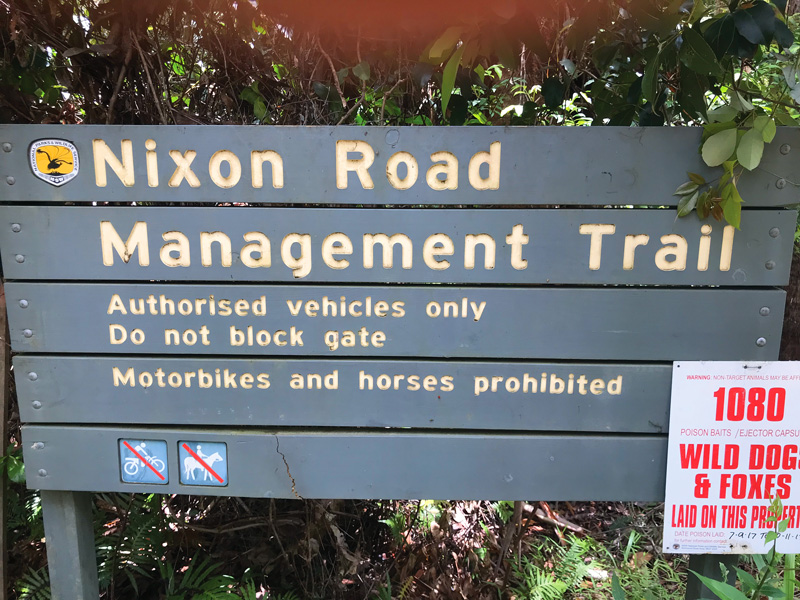
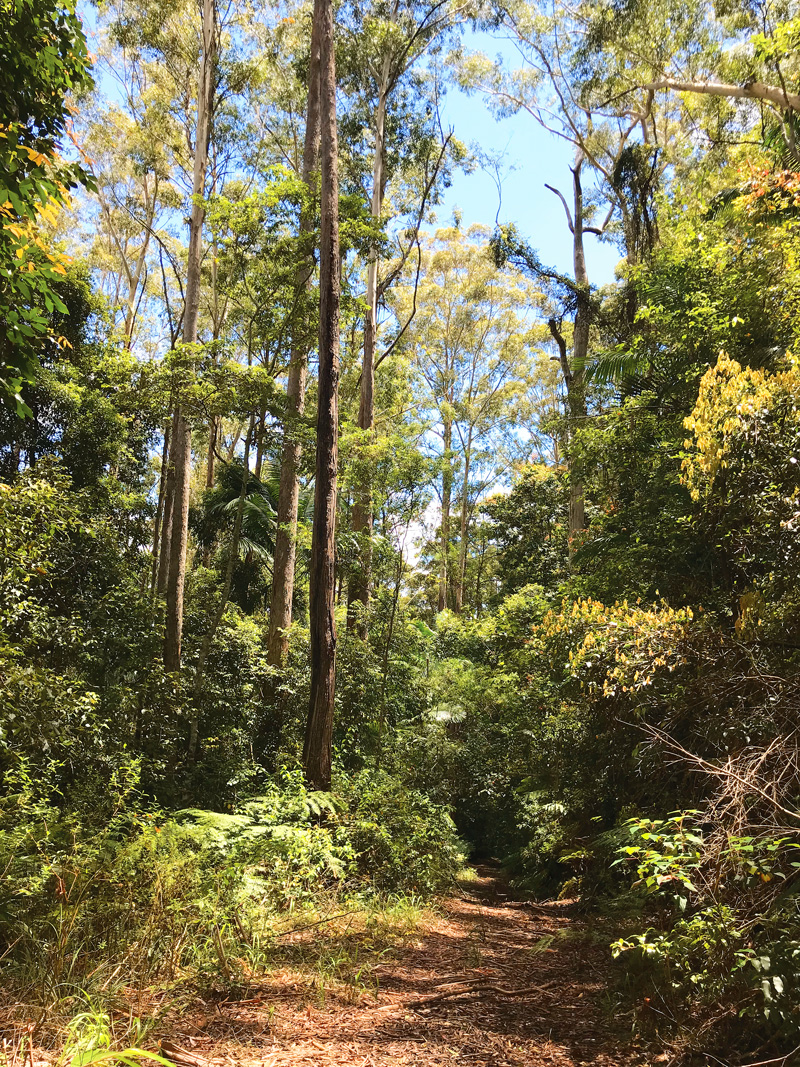
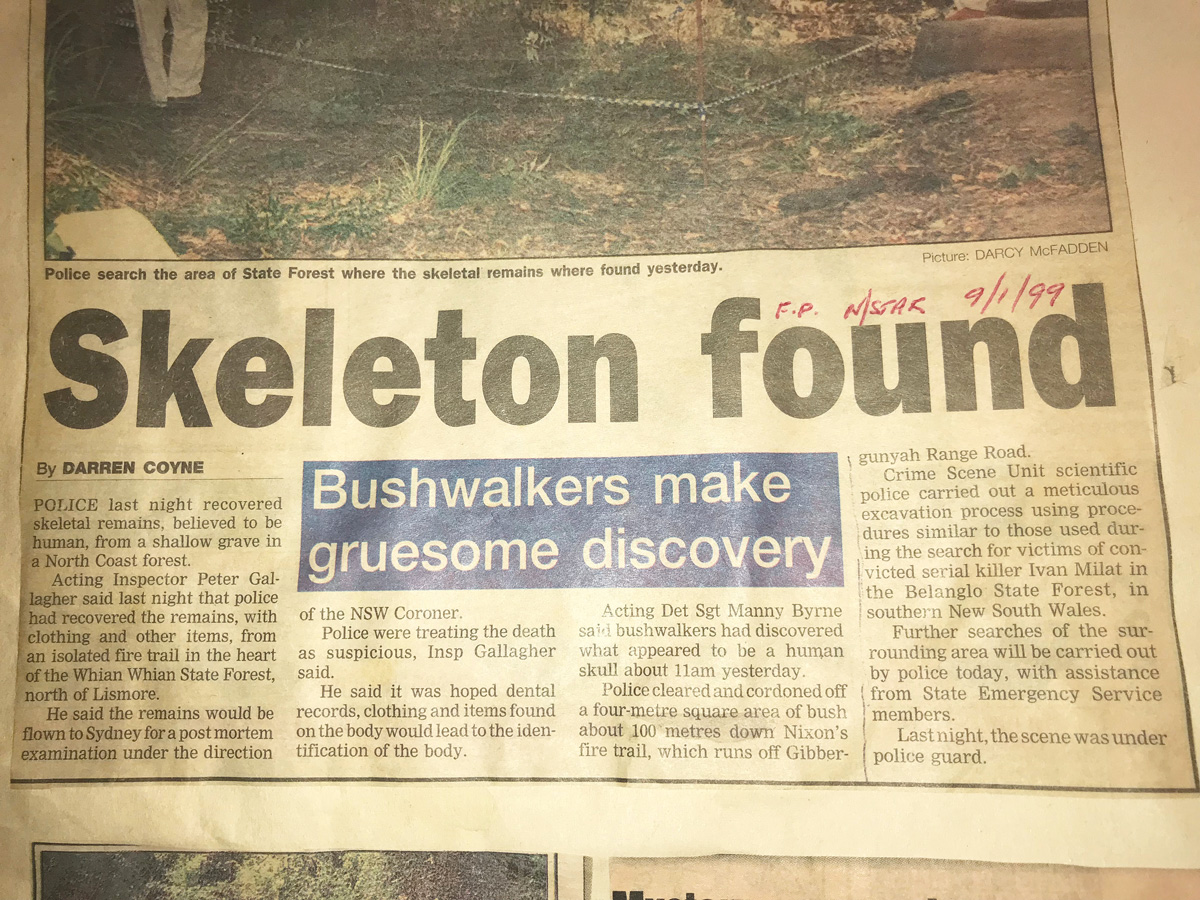
For six agonising months after she vanished from Hitchhikers Corner, the family lived in a nightmare. Then, in January 1999, the claustrophobic heat of summer trapped humidity under the thick canopy of the Whian Whian State Conservation Park. A bushwalker, wandering off a remote fire trail to relieve himself, pushed through a thick curtain of vines and looked down. His blood ran cold. Below him, through a shallow mound of rotting leaf litter, lay human skeletal remains.
It was Lois.
The crime scene was horrific. Her hands were bound together with grey electrical tape, her head was missing and was never recovered.
The initial investigation revealed a terrifying scenario, Lois had not been killed immediately. Police believed she was held captive for up to ten days, subjected to torture and sexual abuse before her murder.
“The detective told me things that happened to her, and he asked me not to repeat it,” Rhoda whispered. “Some of the injuries were so horrific. They felt the body had been held for a period of time.”
“She was an incredible fighter, but I also think she had the lowest pain threshold known to mankind,” Rhoda said, fighting back tears.
“If she was held somewhere, and she was being tortured or sexually abused, I pray that she blacked out. Knowing the way, she used to behave when she was in pain, I hear those cries sometimes and I think, oh my god, my sissy, I wasn’t there for you.”
Rhoda remembered the news came right after the family’s first Christmas without Lois.
“We’d just got back to Sydney, and I literally walked into the house, and the phone rang, and it was my mum telling us they’d found her body,” Rhoda recalled.
The sheer density and vastness of the forest made the discovery feel like a miracle. “There is just no way you would find a body in that forest,” she told me. “Who led that young man into the bush, to relieve himself in that spot and find my sister? So, I truly believe my dad was with me during those days. I really think it was my father. I really believe those old ancestors were calling us out here.”
When we walked out into the Whian Whian forest together, the air thick with the hum of cicadas, Rhoda pointed out the natural markers that brought her a sense of comfort.
“Where she was, there’s these amazing palm trees which have grown and she loved palm trees so that’s a signal for me,” she said softly. “It’s funny because that’s what I see, not her grave, but I see that’s where her spirit probably left her, I probably spend more time there than at the cemetery where her grave is. That means more.”
As word of the murder spread, the Northern Rivers community was awash with rumours and theories about black magic, regional cults operating in the dense rainforests around Nimbin, and predatory men operating on the fringes of the alternative movement. But beneath the wild rumours lay a far more grounded, terrifying reality that locals had known for years: the winding stretch of road between Nimbin, Lismore, and Byron Bay was said to be a hunting ground for predators.
At the time, hitchhiking was the lifeblood of transport for young people, travellers, and locals across the region. Yet, it was common knowledge among women in the area that several had suffered terrifying run-ins while hitchhiking along those exact roads. Women recounted stories of vehicles pulling over, drivers acting aggressively, locked doors, unwanted detours down dirt tracks, and narrow escapes.
In Nimbin, I was told a story about a young woman who was trying to get a ride to Lismore, but shortly after leaving Nimbin, the driver suddenly veered off onto a side road, heading in the opposite direction. Realising the danger, she jumped from the moving car and hid in the tall grass on the roadside until the car finally drove away. Terrified and shaken, she never reported the incident to the police.
Her choice to stay silent wasn’t unusual. We do not know how many others experienced such close calls, went missing, or were murdered along those roads over the years. As locals told me during my reporting in the region, Nimbin had long been a sanctuary, a place people came to run away from their pasts, shed their identities, or drop off the grid entirely.
In an alternative community steeped in deeply entrenched anti-establishment and anti-police sentiment, many residents harboured a profound distrust of law enforcement. When people vanished or when terrifying encounters occurred on the roads, they were rarely reported. In a town where off-the-grid living was the norm and reporting to the police was viewed with suspicion, a predator could operate in the shadows with near-total impunity
When I first began reporting on Lois’s murder, I was genuinely shocked by how little interest there was from the police. The case seemed to be treated as an inconvenience rather than a brutal homicide. Decades later, that indifference still feels uncomfortably real. Very little has happened in regards to the case, a painful fact Rhoda pointed out to me in our final conversation before she passed away.
The heartbreak for the Roberts family was magnified by the knowledge that community tips about suspicious local men had been ignored during those vital early days.
“When there’s a consistent story about a gentleman that Aboriginals who’ve been sitting in the park have heard about a certain man, and it’s never followed up, because there’s an assumption that those Aboriginals were drunk, is so infuriating,” Rhoda said. “We’ve also heard stories of where there were men boasting about having her on their property, and doing things to her. If you’d listened to those people in those first few days, people were talking and you might have had some leads.”
The disparity in how the police and community reacted to Lois’ death compared to non-Indigenous victims remains an open wound.
A few years later, Rhoda watched this racial divide play out in real time when German backpacker Simone Strobel went missing from a Lismore caravan park.
“Lois disappears and then Lismore wakes up one morning to find out that a German backpacker has disappeared,” Rhoda remembered. “Lismore is alive with police, dogs, the whole community came out searching. The town got behind and raised money to assist with the legal costs for her boyfriend and the town also spent money on a plaque to remember this young German backpacker.”
“We’ve lived here for 3,000 generations, this is our country, this is our home. We can’t even afford to get a plaque for my sister’s grave, so at the Lawn cemetery there’s a square box of cement. But we still don’t have enough money to get the plaque,” Rhoda told me. “And it was quite a period of time after Lois disappeared and we still weren’t getting answers, and then to see this rush… they didn’t do it to the same extent for Lois. We can’t even put a cross up where she was found, they tear it down every time we put a cross up. So where’s the memory of her? It just makes me really sad that, yet again, is it because we’re Aboriginal?”
The difference in the treatment of a black victim reflects a broader, systemic crisis across Australia.
Decades of parliamentary inquiries and statistics lay bare an unvarnished reality, First Nations women make up a grossly disproportionate percentage of homicide victims, yet their disappearances routinely meet a wall of police apathy, delayed searches, and media indifference.
When a white woman vanishes, the state mobilises helicopters, extensive search grids, and national press conferences; when an Aboriginal woman disappears, her family is told she “went walkabout”.
This institutional neglect inflicts an insidious, psychological violence on grieving families, forcing them to realise they are their own.
“It almost says, ‘well, you’ve lost your sister, just don’t expect anything,’” Rhoda confessed.
“And over the years, you learn to live with it. But you carry this certain hurt, every time I talk about it I get this pain in my throat, because I do end up blaming myself. Then you go, ‘geez, we should’ve just done what the Morcombes did.’ But we didn’t have that at our disposal. And then you go… ‘well, you know, I’m just a dirty black fella, it doesn’t matter’…”
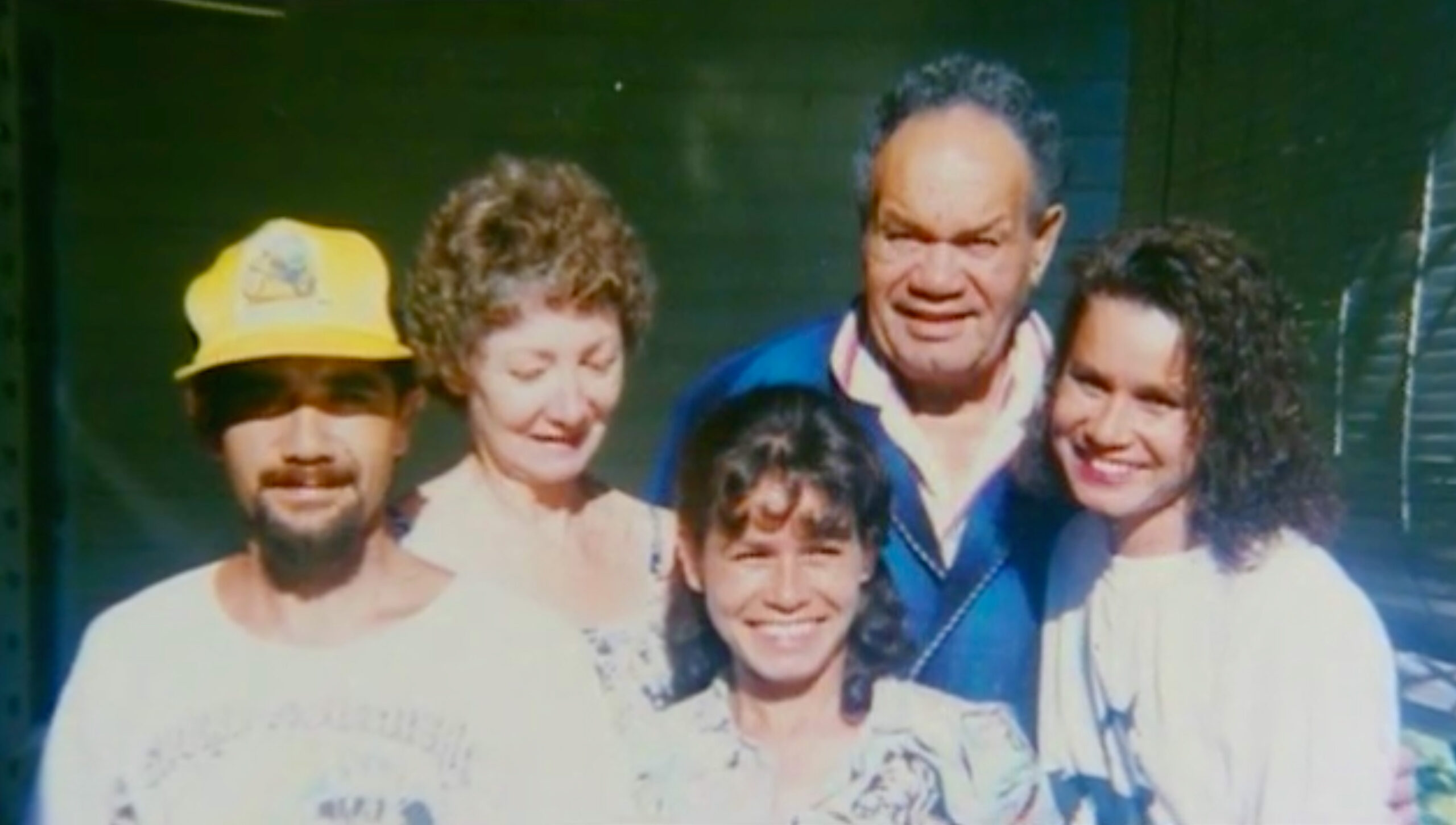
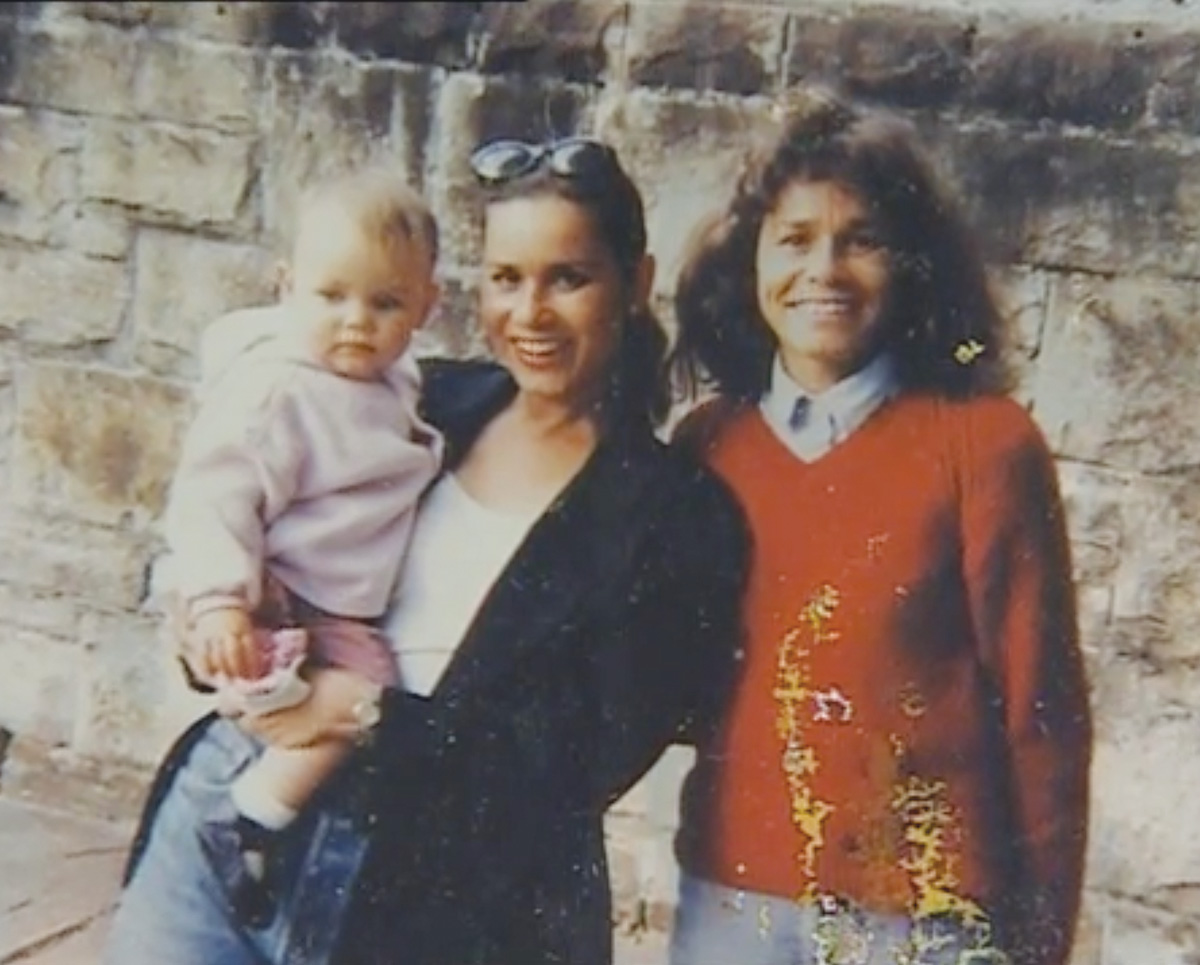
Faced with the failure of the justice system, Rhoda channelled her grief into love, taking on the duty of raising Lois’s young daughter, Emily.
“I get the opportunity to raise my sister’s daughter. And you know, in a way, she’s my daughter too. And that is an incredible gift,” Rhoda said with immense pride.
As Emily grew into a fierce, brilliant woman, Rhoda watched her twin sister bloom within her. “I do very often see Lois in her, it’s quite extraordinary you know, she has the mannerisms, she does little things like Lois,” Rhoda told me.
“But the most extraordinary thing is if we’re having a discussion about a world issue or even something closer to home like marriage equality, I hear Lois’ voice, I hear the smarts, she’s passionate, she is a really compassionate, smart young woman and that’s where I get uplifted because I actually go, ‘your mother would be so proud of you.’”
Rhoda, despite all of her success and impact on the Australian and International arts scene, spent the rest of her life carrying the heavy, unresolved weight of 1998, admitting that the tragedy changed her very core.
“I’m not the person I was, and I’ll never be that person I was before 1998,” she admitted in one of our final sit-downs. “And I hate that, because I was a really good person, I was, and I can never be her again. Well, I can’t rest because I want to know why, I guess is the biggest thing for me. What happened, why? Why did you do this to this girl? What did she do to you?”
It is now up to the living to answer Rhoda’s final request. The person or people responsible for the abduction, torture, and murder of Lois Roberts walked among the streets of Nimbin and Lismore. For twenty-eight years, police apathy and a wall of silence have shielded a killer.
To the end, Rhoda questioned why a reward was never offered for information about her twin. She knew Lois deserved a million-dollar reward, just as she knew why it was denied because Lois was an Aboriginal woman.
Pushing for a reward falls on the Richmond Police District, for those who knew and loved Lois, their failure to support illustrates the double standard between the value of a white life and a Black life in the eyes of the law. Lois’s family deserves answers.
I will always remember standing silently with Rhoda, our feet in the cool water of the creek, at Whian Whian as she gazed out into the dense tangled forest. A sister still searching, carrying a quiet hope that one day, justice would finally find its way through the trees.