Beauty salvaged from the landscape
Inspiration drawn from traditional lands of the Dharawal and Dhurga language groups around the Shoalhaven River have once again inspired significant new works from leading contemporary First Nations women artists.
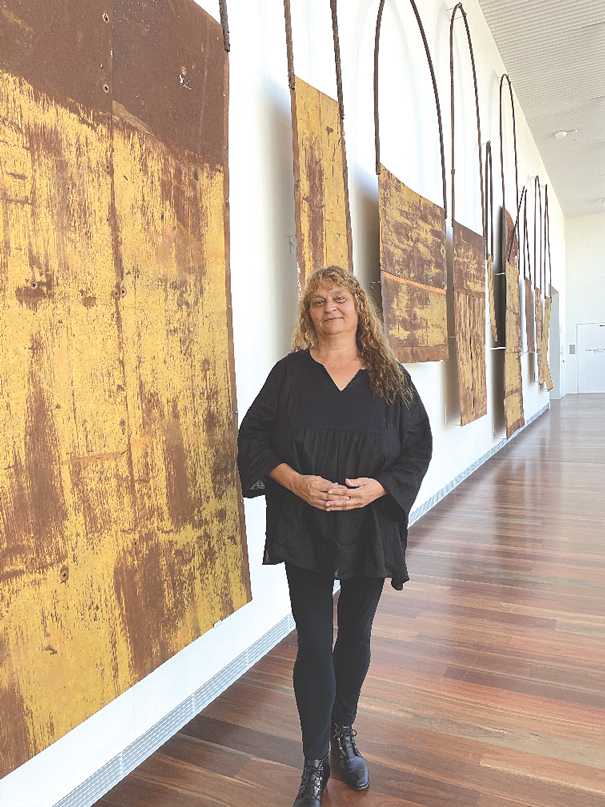
New works from leading contemporary First Nations women artists displayed at Bundanon.
By CHRISTIAN MORROW
Inspiration drawn from traditional lands of the Dharawal and Dhurga language groups around the Shoalhaven River have once again inspired significant new works from leading contemporary First Nations women artists Lorraine Connelly-Northey, Janet Fieldhouse and Glenda Nicholls that will hang alongside works by the late Rosalie Gascoigne at Bundanon Art Gallery.
Presented from March 7 to June 14, Rosalie Gascoigne: Sky, Earth, Water will showcase more than 20 of Gascoigne’s assemblages of salvaged materials on loan from a number of major Australian institutions.
Bundanon CEO Rachel Kent said the gallery was proud to present major new commissions by leading contemporary First Nations artists alongside Gascoigne’s renowned works.
“Together, these parallel presentations create a powerful dialogue across generations and perspectives, celebrating the enduring role of landscape, memory and material in shaping artistic expression,” she said.
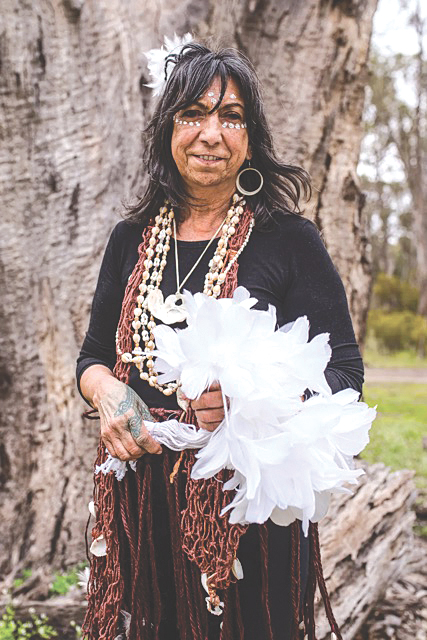
Glenda Nicholls
Glenda is an expert weaver and multi-clanned Aboriginal woman of Waddi Waddi, Yorta Yorta and Ngarrindjeri descent based in the Swan Hill region of Victoria.
Gifted her net-making technique from her ancestors in a dream, she has since created a significant body of sculptural work reviving her ancestral practice and their deep connection to waterways, plants and grasses on her Country, ensuring its protection for future generations.
Her woven works are based on intergenerational skills handed down from her mother and grandmothers, and are created from contemporary materials such as jute twine and raffia, reflecting the adaptation of traditional techniques to contemporary life.
“Our weaves are never empty, they are filled with our thoughts and feelings,” she said.
For Bundanon, the artist is presenting a major woven installation, hand dyed to reflect the rocky escarpments of the area.
The large, colourful basket forms were created by Nicholls’ sister, Darlene Cunningham, using a coil-weaving technique.
These, alongside many smaller circular weavings, represent the boulders and pebbles at the base of geological formations like Pulpit Rock, a jutting landmark that caught the artist’s eye on her visit to Bundanon.
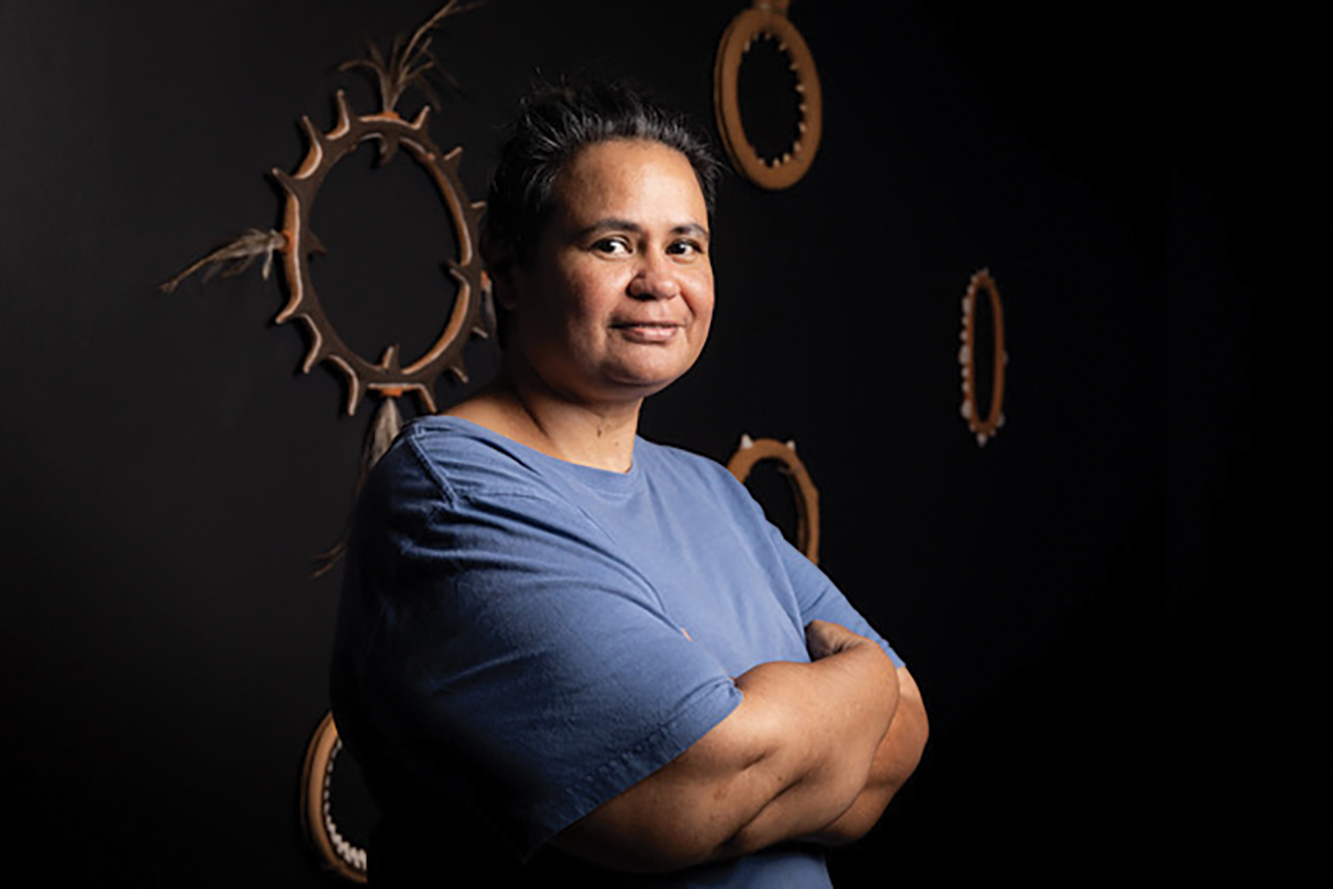
Janet Fieldhouse
Janet is a Meriam Mer (Torres Strait) ceramic artist based in Cairns, Queensland.
Her hand-built forms acknowledge Torres Strait traditions of navigation, living from the sea and the land, and women’s practices such as weaving body adornments for ceremony and scarification.
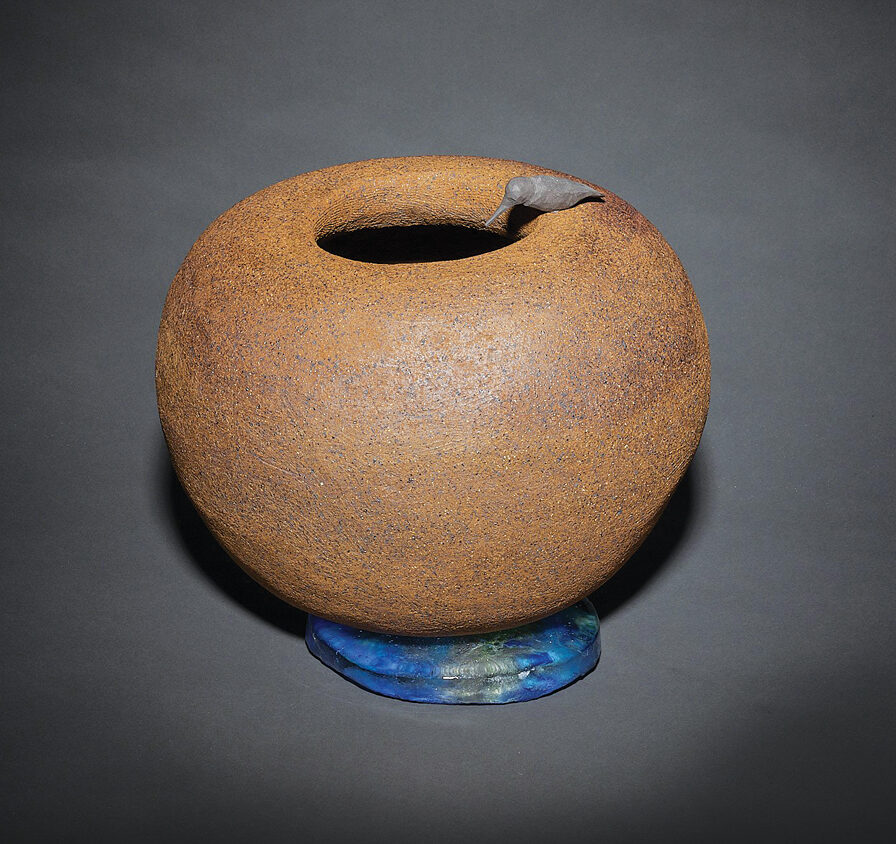
Bringing together new and existing works, Fieldhouse’s Bundanon exhibit will focus on the bird and animal life of the Shoalhaven region.
Coming from a coastal environment to the relative quiet of the Shoalhaven bush had a big impact on the artist. In the time Janet was on location the kookaburras were out and bird forms feature in two works in the show, Enigma 3 and 5.
Instead of looking up and out at the noisy relentless ocean and the sky of home Janet was more focussed on looking down on the ground for the Bundanon show.
A surprise discovery Janet made in the landscape (one Janet will allow viewers to also make for themselves) led to a change in forms she produced for the show.
“The work I had made is rough and still uses curved forms but I made them more into a gentle square shapes. It’s unusual for me to come out with something like that,” she said.
“I also have (been inspired by) a very small flower, really tiny, something you would not see unless you were looking down on the ground.”
Instead of telling audiences what meanings they should take from her work Janet is looking forward to seeing what meanings audience will make for themselves.
“I find that if somebody’s looking at the work, if they’re drawn to it, they’ll see it differently to the way I see it,” she said. “So I let them have that. It’s more their story. I just go with the flow.”
Lorraine Connelly-Northey
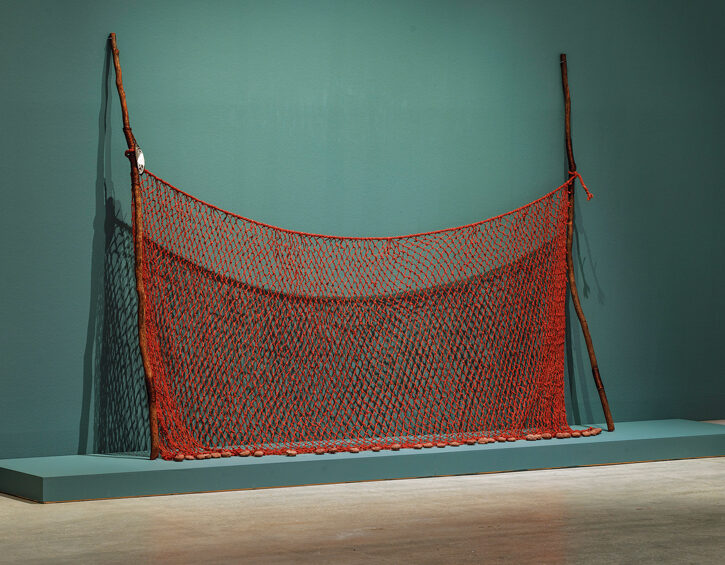
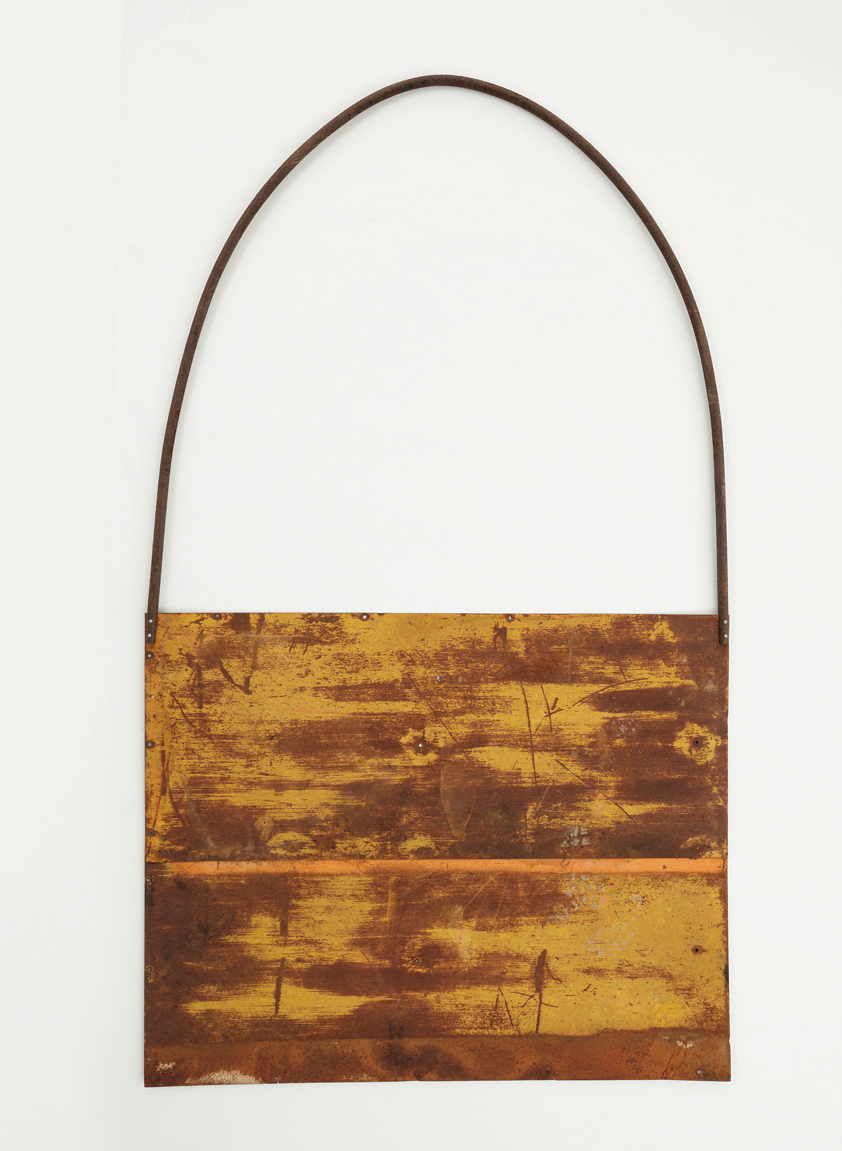
Born and raised on the cultural boundaries of the Wamba Wamba and Wadi Wadi peoples in the Swan Hill region of north-western Victoria and now living on her mother’s Country, Waradgerie (Wiradjuri) Country in NSW, Lorraine is well known for her large-scale metal sculptures inspired by Aboriginal fibre bags, also known as bush bags.
Engaging with Bundanon’s expanded art-museum spaces, Connelly-Northey has created an installation in conversation with the Dharawal and Dhurga stories of place.
“I’m doing work to represent the gatherers, the implements used by traditional Australian gatherers to collect and carry food – the bush bowl, digging stick and bush bags,” she said.
Connelly-Northey often speaks of the land as her mother. When out recovering materials, often from abandoned rural tip sites, she sees this activity not only as a way to clean up Country, but also as way of metaphorically removing a scar from her mother/Country.
“I’m always on about motherland and looking after your mother. I also have a bit of a laugh and say I am doing my bit to clean up Australia,” she said. “But on a serious note, I am taking back Country and that’s the power of it – you can’t be more powerful than that. I’m not taking bits of Country, I am fixing up those scars on my mother.
“It’s very exciting when I take pieces off Wiradyuri land (Connelly-Northey spells Wiradjuri the way her grandfather spelled it) because it is exciting to see re-growth on the land and even more so to see medicinal plants growing there.”
Incredibly, after recovering the material from the landscape, often rusted iron sheets and fencing wire and even barbed wire, she works the materials with her bare hands.
“I don’t wear gloves,” she said.
“In a twisted way I’m trying to earn what wasn’t handed down to me. Sometimes I regret using my bare hands but that’s part of me earning the right to be able to do what I do. Even working with barbed wire I’ve been so fortunate. I think with the right attitude you can avoid being hurt by the material – you have to be more gentle.
“For this Bundanon work I was impatient to get going because I knew we had a really hot summer coming and I’ve got to handle metal that has heated up in the sun. But if the metal is hot I’ll pick up using a handful of grass to protect my skin.”
When Connelly-Northey makes and exhibits work, aside from taking account of the physical object itself, she is also aware of the qualities of the shadows cast by her work.
“They (the shadows) excite me. I give credit to the Koori Heritage Trust. They bought in an installer in 2004 who hung my work from the ceiling, which was the first time I’d seen my work displayed like that. What shocked and captivated me the most as I stepped in to the space was all these shadows and lines cast on the wall,” she said. “It shows that an art installation can really surprise and impress you. It also helped me to later draw with wire. I like to joke with people that they get two for the price of one. There’s the actual object and also another line drawing in the shadow. It’s quite beautiful, the shadows can be quite distorted by the lighting.”
For more information about Bundanon, which is located on Dharawal and Dhurga-speaking Country in the Shoalhaven Region of the NSW South Coast, go to bundanon.com.au