Icons of First Nations sporting history
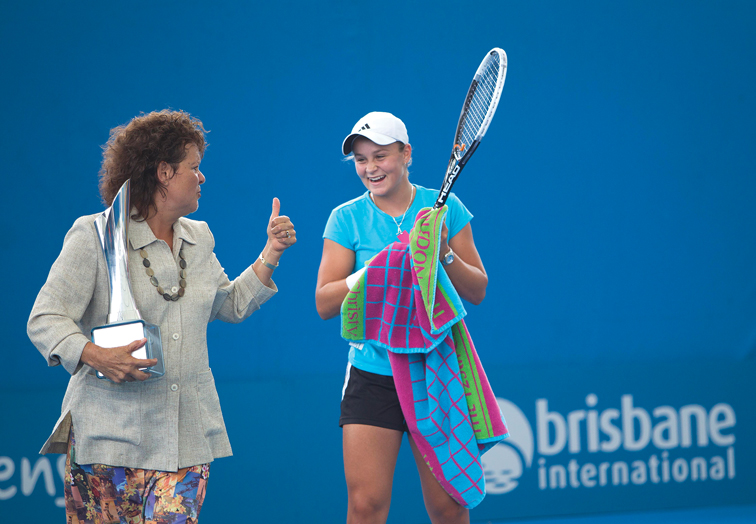
Evonne Goolagong Cawley – Not only the first lady of tennis in this country, there is also a significant argument that Evonne Fay Goolagong Cawley is the ultimate “First Lady” of all Australian sport.
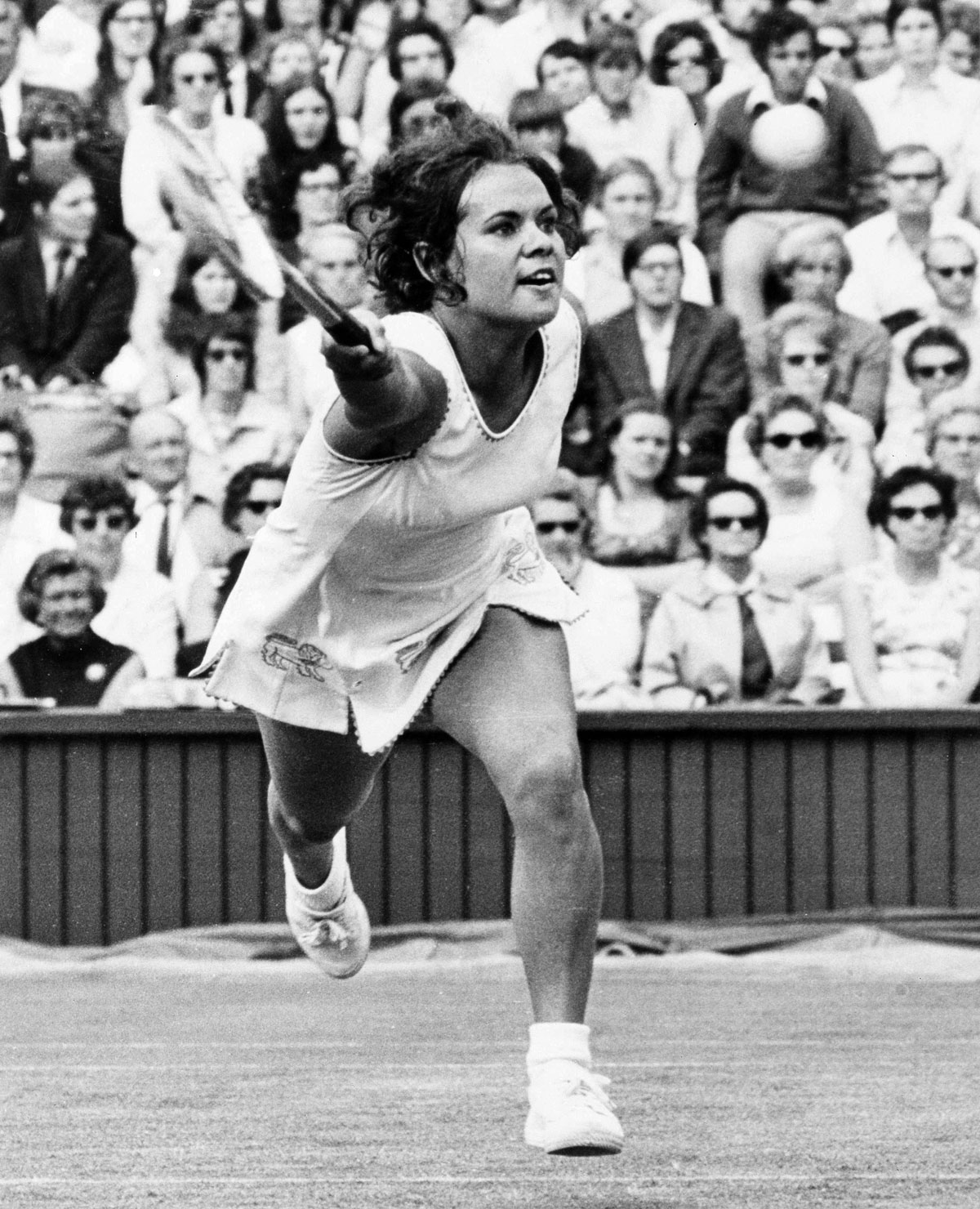
Evonne Goolagong Cawley. Picture: supplied.
In a special series for 2026, two-decade correspondent of the Koori Mail PETER ARGENT looks back across the history of First Nations sports people in this country, looking for the competitors that became heroes and idols in their respective sporting codes.
Evonne Goolagong Cawley
Not only the first lady of tennis in this country, there is also a significant argument that Evonne Fay Goolagong Cawley is the ultimate “First Lady” of all Australian sport.
Her list of accolades alone, which include no less than seven Grand Slam tennis singles tournaments, are testament to her brilliance and dedication to her craft, but also the way she carried herself through all the peaks and the occasional trough across her brilliant career.
She is one of those special individuals rarely seen on our national sporting stage.
Goolagong Cawley played the game with a grace, elegance and flair that made her a champion in every sense of the word. She is the third of eight children from her Wiradjuri family. She was born in Griffith, New South Wales, in 1956 and grew up in the small country town of Barellan.
Goolagong Cawley was able to play tennis in Barellan from childhood, thanks to a local resident, Bill Kurtzman, who saw her peering through the fence at the local courts and encouraged her to come in and play.
In 1965, Vic Edwards, the proprietor of a tennis school in Sydney, travelled to Barellan to “take a look” at the young tennis player and immediately saw her potential.
Edwards persuaded her parents to let Goolagong move to Sydney, where she attended Willoughby Girls High School, completing her school certificate in 1968. Goolagong lived with the Edwards family and Vic Edwards became her legal guardian, coach and manager.
In 1971, her first Grand Slam title was won on the clay at the French Open; aged 19 as the third seed, she defeated Helen Gourlay in two sets in the final, 6-3, 7-5.
She quickly followed with her inaugural Wimbledon Singles Championships title, defeating fellow Australian Champion, Margaret Court comprehensively, 6-4, 6-1.
Between 1973 and December 1977, there were four Australian Singles Championship titles on grass at Kooyong.
Her seventh and final title was after motherhood at Wimbledon in 1980, she defeated Chris Evert Lloyd 6-1, 7-6. She became the first mum to win the title in 66 years.
In total, Goolagong Cawley played in 18 Grand Slam finals between 1971 and 1980.
Her win/loss ratio in all Grand Slam singles tournaments was an amazing 82 per cent (133–29), the French Open 84 per cent (16–3), Wimbledon 83.3 per cent (50–10), the US Open 81.3 per cent (26–6) and the Australian Open 80.4 per cent (41–10).
Across her stellar career Goolagong won 86 WTA Tour-level singles titles, and 46 doubles titles, including seven doubles majors. Goolagong Cawley had a six-win one-loss record in grand slam Doubles.
She, with Margaret Court, won the Australian Open doubles final in 1971, but they lost the Wimbledon final in 1971 to Rosemary Casals and Billie Jean King from the USA.
With Peggy Michel from the USA, Goolagong Cawley won two Australian Opens in 1974 and 1975, along with the ’74 Wimbledon doubles event.
Her final doubles Grand Slam was with Helen Gourley at the Aus Open in 1976.
She also won the 1972 French Open mixed doubles championship with Kim Warwick and was runner up in the ’72 Wimbledon mixed doubles with him as well.
She represented Australia in three “Fed Cup” competitions, winning the title in 1971, 1973 and 1974.
She first met her future husband, Englishman Roger Cawley, in 1971, marrying him on June 19, 1975.
Cawley became her coach, hitting partner and manager from the time they married.
Discovered in December 2007, more than three decades after the event, Goolagong Cawley was number one ranked player in the women’s world tennis for two weeks in 1976.
In 1988, she was inducted into the International Tennis Hall of Fame.
Goolagong Cawley was named Australian of the Year in 1971.
She was appointed as a Member of the Order of the British Empire in 1972 and as an Officer of the Order of Australia in 1982. Goolagong Cawley was inducted into the Sports Australia Hall of Fame in 1985 and was inducted into the Aboriginal Sporting Hall of Fame in 1989.
She leads the Goolagong National Development Camps for Indigenous boys and girls, which encourages Indigenous youth to eat healthy, exercise and stay in school.
Since 2005, the Evonne Goolagong Foundation has awarded school scholarships, produced tennis coaches, sports administrators, university scholars and has helped with employment placement.
Footnote – The Federation Cup, (abbreviated to Fed Cup in 1995), which started in 1963, is the women’s equivalent to the Davis Cup international men’s tournament, where each country plays in a knockout event across the year.
It was renamed after one of Goolagong’s early rivals from the 1970s, the “Billie Jean King Cup”, in 2020.