Family’s 38-year fight for the truth
In the summer of 2013 Uncle Don ‘Duck’ Craigie, a wiry, fierce fella originally from the Moree mission, was making a public appeal for any information regarding the mysterious death of his 17-year-old nephew, Mark Haines, back in 1988. ALLAN CLARKE reports.
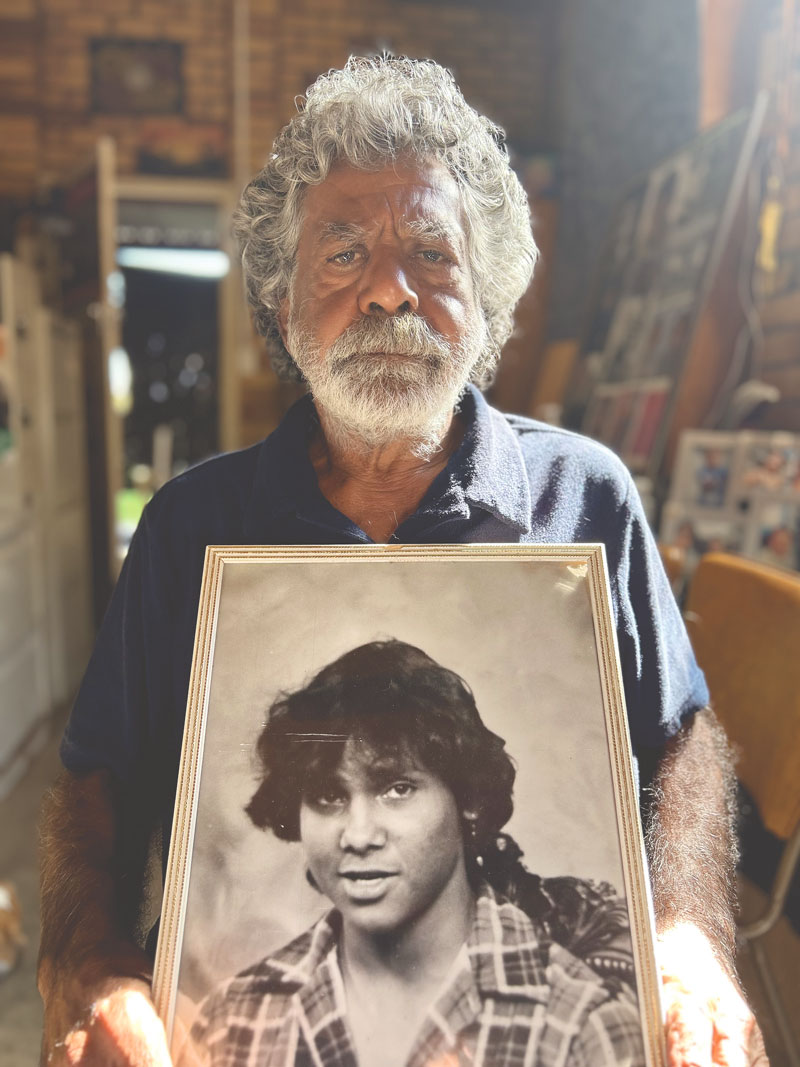
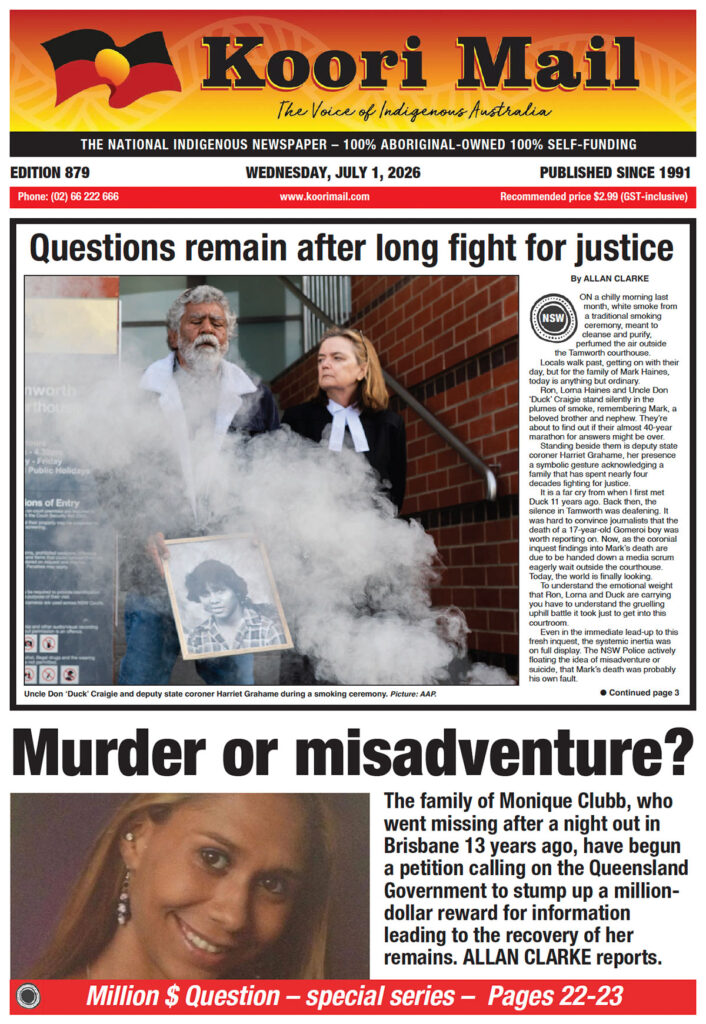
Uncle Don ‘Duck’ Craigie, with a photo of his beloved nephew Mark Haines, who died in mysterious circumstances in 1988.
By ALLAN CLARKE.
On December 18, 1838, an angry crowd gathered outside the Sydney Supreme Court. Their rage was directed not at a crime, but at the concept of justice. Seven white stockmen were about to be hanged for their roles in the Myall Creek massacre, where at least twenty-eight defenceless Aboriginal men, women, and children had been brutally slaughtered.
The public outrage was deafening. The settler colony was genuinely appalled, not by the murders of innocent Aboriginal people, but by the audacity of the judiciary to hold white killers criminally accountable.
Their defence had been heavily funded by wealthy local squatters, and newspapers openly argued that the lives of the Black victims were lesser.
The execution of those men did not signal a new era of equality; instead, it served as a stark warning to the colony that if you afford Aboriginal victims of crime the same rights afforded to white victims, you can expect a fierce backlash from the public and apathy from the media.
Nearly two centuries later, it is hard not to see parts of that colonial blueprint interwoven into the fabric of our modern justice system and media.
There is a distinct, devastating pattern to the way modern Australia remembers and forgets its dead. If you are a victim of a violent crime in this country and you happen to be Indigenous, the justice system often operates under a completely different set of rules. Countless stories of Aboriginal disappearances, stretching from the bottom of Victoria to the top of Western Australia, are routinely dismissed as a “lifestyle choice”. The cold truth is that if you are Black and you are murdered or go missing, your death is all too often packaged into a tidy, convenient narrative of self-harm, intoxication, or misadventure before the first twenty-four hours have even elapsed.
When I first started looking into unsolved Indigenous homicides I discovered a national architecture of apathy. From the red dust of the desert to the coastal bush and rural railway lines, the exact same systemic rot plays out with terrifying predictability. It is an anatomy of neglect that ties grieving Aboriginal families together in a shared, generational trauma, a reality where the state walks away, and the heavy, exhausting burden of investigating a potential murder is often inherited entirely by the victims’ loved ones.
Senate inquiry
As prominent Darumbal journalist, academic, and writer Dr Amy McQuire argued before the Senate Inquiry into Missing and Murdered First Nations Women and Children in 2024, this systemic pipeline of neglect is reinforced at the very inception of a case by mainstream media viewing law enforcement uncritically.
McQuire noted: “The mainstream media reiterates, without question, the information provided by police, which compromises both outcomes and the quality of the investigation… I think, at the very integral beginning of an investigation, the media have to be there and questioning the police, not viewing the police as the primary informant, but questioning them at every point.”
In all of the cases I have investigated, the failures always begin in the hours immediately following a tragedy. In standard policing protocols, an unexplained death requires the preservation of a potential crime scene and an open-minded pursuit of objective facts. But in an Aboriginal cold case, the process is largely inverted. The investigation rarely begins with a question; it largely begins with a biased conclusion.
Data compiled by the National Homicide Monitoring Program, presented at the Senate Inquiry into Missing and Murdered First Nations Women and Children, revealed a grotesque national crisis.
Between 1989-90 and 2021-22, 476 First Nations women and 158 First Nations children were recorded as victims of homicide. Indigenous women represent roughly 15 per cent of all female homicide victims in Australia, despite making up just over three per cent of the total Australian female population.
Across more than three decades, the Australian Institute of Criminology noted that Indigenous women consistently experienced rates of murder between three and thirteen times higher than their non-Indigenous counterparts. The inquiry found that the majority of those victims received little to no justice; in many instances, perpetrators were simply never held to account.
Wall of indifference
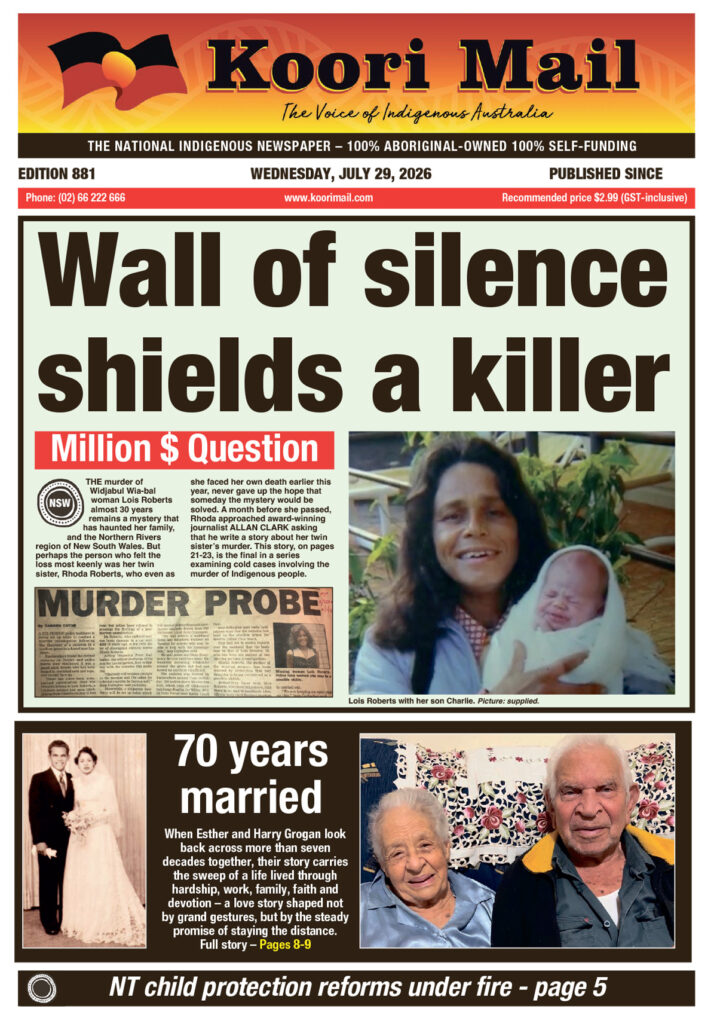
This is the exact wall of indifference that Monique Clubb’s family hit in June 2013. When the twenty-four-year-old Aboriginal woman vanished after travelling from Hervey Bay to Beenleigh, the Queensland Police response was agonisingly sluggish, characterised by a lack of urgency that has left her family entirely in the dark for years.
It is a national crisis that does not just affect women and children. In Western Australia, a staggering number of Aboriginal men have gone missing, leaving their families pleading for information and help from a public and media that have largely let them down. In recent years, a pattern of disappearances has emerged across the west, including the cases of Zane Stevens, Jeremiah Jayo Rivers, Wylie Oscar, Clinton Lockyer, Wesley Lockyer, and Jimmy Taylor.
The recent disappearance of thirty-seven-year-old Brenton Shararr from Geraldton in May 2024 is just one example. When the father of two went missing, his family knew something was wrong and immediately began their own search, frantically driving the streets and door-knocking. While the family was effectively conducting their own investigation, it took the Western Australian police weeks to launch a comprehensive forensic and aquatic search. By the time police divers finally entered the water at the Geraldton Marina, it was only because Brenton’s partner had personally found his shorts washed up on the beach three full weeks after he vanished. It is a story repeated time and time again: distraught loved ones left in a painful holding pattern.
This lack of urgency appears to be hardcoded into the history of the Australian judiciary.
In April 1975, Queenie Hart, a vibrant twenty-eight-year-old Wakka Wakka woman who grew up under the oppressive restrictions of the Cherbourg Aboriginal Settlement, was found murdered, her body abandoned in the mangroves alongside the Fitzroy River in Rockhampton. Police arrested a white railway fettler, Steven Henry Kiem, who had allegedly confessed to binding her arms and ignoring her screams for help. Yet, just days into the trial, the judge abruptly dropped the murder charge, declaring a jury could never be satisfied of his guilt.
The media coverage from the time launched a vicious character assassination on Queenie, labelling her a risk-taking prostitute, while the accused was portrayed as a regular, hard-working bloke. The message from the court was clear, an Aboriginal woman’s life was entirely disposable.
Negligence
Because the default assumption in so many of these cases is that no foul play has occurred, crime scenes are not properly secured, vital evidence is not logged, and potential witnesses are never questioned. This early negligence makes it incredibly difficult down the line to secure a fair trial or a conviction.
This pattern is nowhere more apparent than along the train tracks of northwest New South Wales. In January 1988, seventeen-year-old Gomeroi teenager Mark Haines was found dead on the tracks outside Tamworth. Nearby, a stolen white Holden Torana sat crashed. The police response was lacklustre and lazy. Authorities simply assumed the Aboriginal teenager had stolen the car, crashed it, walked onto the line, and laid down to die.
Because of this assumption, the crime scene was never properly secured or searched. A bloodied towel found propped under Mark’s head, a strange part of the scene, was lost by police and never entered into evidence. The crashed Torana sat exposed to the elements for weeks without ever being protected, fingerprinted, or forensically analysed.
Unbelievably, just seven years later and less than fifty kilometres down the exact same railway line, history repeated itself. In October 1995, seventeen-year-old Aboriginal teen Stephen ‘Whiffy’ Smith was found struck and killed by a freight train between Quirindi and Werris Creek. He was an outgoing, popular football player with a community that adored him. Yet, the police insisted that Stephen, who had been seen trying to hitchhike home, had simply chosen to lay down on a remote, dark stretch of the track.
“It happened really quickly and nothing came of it, it’s like everyone forgot about it, case closed. We just want to know what happened to Steve,” Stephen Smith Senior told me when I reported on the story, “Because he’s Aboriginal, that’s all I can think the problem would be.”
Unpaid detectives
The most heartbreaking, defining characteristic of these cold cases is this forced inheritance of the investigation. When law enforcement walks away, grieving families are forced to do their own searches and investigations. Uncles, mothers, aunts, and siblings turn into reluctant, unpaid detectives, carrying the trauma of their loss knowing they have little support from authorities. When Colleen Walker-Craig, 16, Evelyn Greenup, 4, and Clinton Speedy-Duroux, 16, went missing from the small mid-north coast NSW community of Bowraville within a five-month period between 1990 and 1991, police explicitly told their parents that the children had probably just “gone walkabout.”
The string of failures continued when a suspect was finally charged. The prosecution initially wanted to try the suspect for the murders of Clinton and Evelyn together; however, the trial judge ruled that coincidence and tendency evidence was inadmissible under the laws of the time, forcing the cases to be prosecuted separately. This fragmented approach yielded much weaker, circumstantial cases, resulting in acquittals.
Refusing to accept defeat, the families spent more than thirty years lobbying for justice, successfully forcing historic changes to the state’s double jeopardy laws in 2006 to allow a retrial if “fresh and compelling” evidence emerged. Armed with this new legislation, a massive push was made to bring all three cases to a joint trial.
Yet, when they finally reached the High Court of Australia, the families were told the application failed because the evidence surrounding the other children was not legally “fresh.” Under the strict technicalities of the statute, the judiciary ruled that because this evidence had been known and available to be raised during the original trial eras, it could not be classified as “fresh” even though a jury had never actually been permitted to hear or consider it collectively. It was a devastating semantic trap that used the state’s own historical, botched trial structures to permanently lock the door to justice.
This state apathy does not exist in a vacuum; it is the flip side of a system that over-polices and incarcerates First Nations people at high rates while simultaneously failing to protect them when they are victims. The 1991 Royal Commission into Aboriginal Deaths in Custody made 339 sweeping recommendations that laid bare a dark reality, that the entire criminal justice system operates under an inherent racial bias that devalues Black lives. This bias means that while law enforcement invests vast resources locking up Black people, that energy completely vanishes when an Aboriginal person goes missing or is found dead.
Devastating weight
The physical and emotional toll of this systemic abandonment is a devastating weight carried across generations. In the case of Mark Haines, his parents passed away before ever seeing a modern courtroom, literally dying of broken hearts. For Queenie Hart’s family, the trauma spanned decades, her mother passed away in 1983 with her dying wish to bring her daughter’s remains back to Wakka Wakka Country denied.
It was not until August 2022, after the family was forced to crowdfund $20,000 entirely on their own, that Queenie was finally exhumed and returned home.
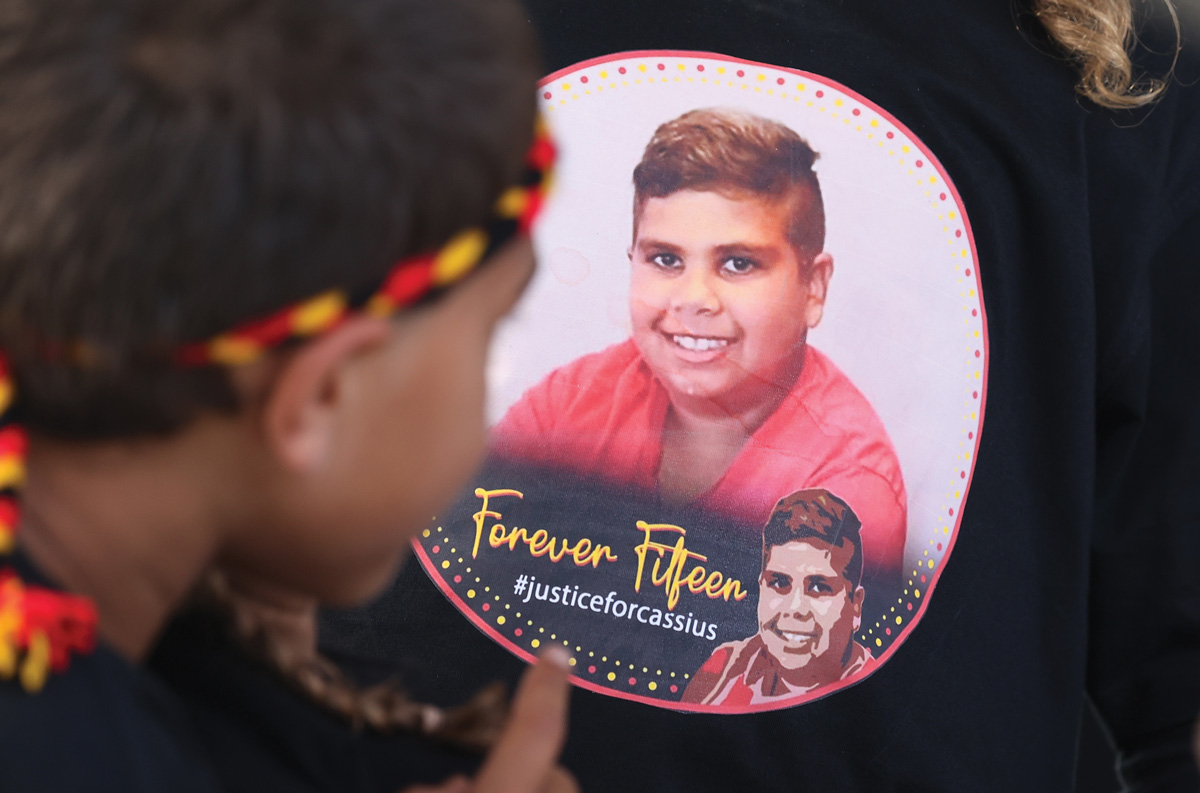
Even when the violence occurs in the modern glare of social media, the institutional reluctance to act remains palpable. When fifteen-year-old Noongar boy Cassius Turvey was violently attacked with a metal pole while walking home from school in Perth in October 2022, eventually dying from horrific head injuries, his community was forced to mobilise. Before a thorough investigation could even take place, senior police figures publicly suggested the attack may have simply been a case of “wrong place, wrong time,” sparking national outrage and forcing Indigenous people to march in the streets just to ensure a brutal attack was treated with the severity it demanded.
In recent years, some states have attempted to address these long-standing silences with million-dollar cold-case rewards. The offer of life-changing sums of money for information on cases like the 1988 death of Mark Haines or the disappearances of the Bowraville children were eventually offered decades after a lack of initial interest meant that cases went cold.
These million-dollar rewards are not a sudden burst of altruism from the justice system. They are admissions of historical guilt. The state is effectively admitting that its own early apathy allowed a wall of silence to harden in these communities.
Now, decades later, when memories have faded and witnesses have passed away, the government has to put a million dollars on the table to shatter the very culture of secrecy that its own initial indifference helped cultivate.
Former Aboriginal and Torres Strait Islander Social Justice Commissioner Mick Gooda has spoken out directly about how the institutional processes of the justice system fail from the outset if they lack deep, structural community integration. “To have confidence in the outcomes we have got to have confidence in the process. If you fundamentally miss the needs of the community, everything else is going to be flawed down the other end.”
Blistering findings
In several recent coronial inquiries into Aboriginal deaths, the findings have been blistering towards initial police handling. When State Coroner Teresa O’Sullivan handed down her 2024 findings into the 1987 deaths of teenager cousins Mona Lisa and Cindy Smith in Bourke, she explicitly labelled the initial police work “wholly and inexplicably deficient” and ruled that racial bias within the force had directly impeded the investigation, noting the “uncomfortable truth” that had two white teenage girls died in the same circumstances, an identical systemic failure would be inconceivable.
The lonely railway lines, the isolated mangrove swamps, and the red dust highways of this country are not just geographic features. They are places where Black bodies are found and written out of Australia’s memory. But the silence is finally being broken. Not because the system woke up to its flaws, but because the families refuse to go quietly into the dark.
Their endurance is living proof that while the judicial system of this country is slow, bureaucratic, and reluctant to confront its own past, the truth remains a stubborn, unyielding thing. From the Myall Creek trial courtroom to the steps of Parliament House today, the fight remains unchanged, forcing Australia to afford its First Peoples the basic human dignity of truth and justice.
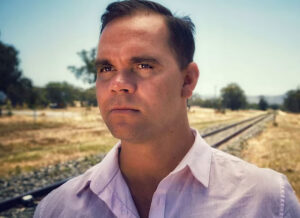
Allan Clarke is an award-winning investigative journalist, currently based in France. He is a Muruwari/ Gomeroi man from Bourke, in far-western New South Wales.
This article is the sixth in a series examining cold cases involving the murder of Indigenous people.