Where do the hungry mutton birds feed?
LITTLE black trackers that look like tiny mobile phones.
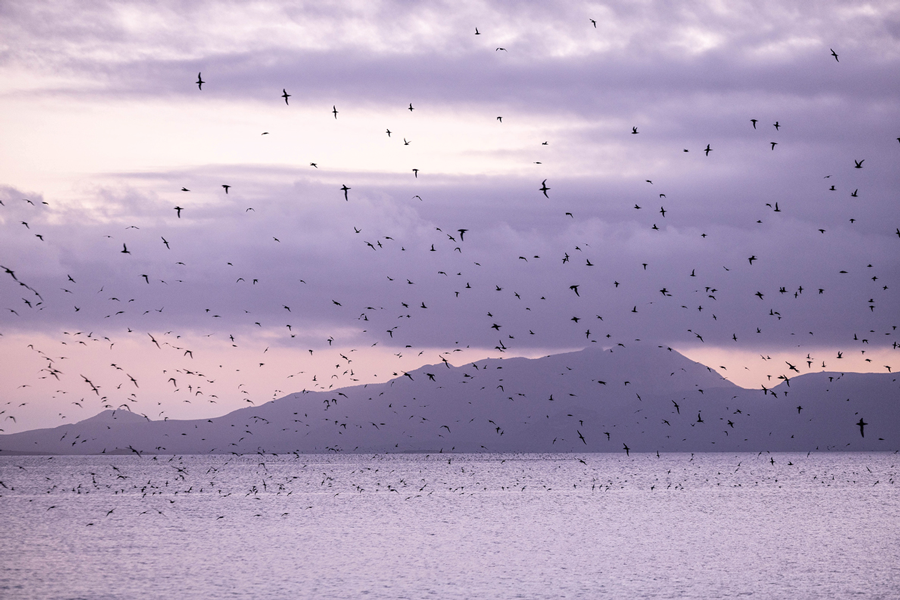
Birds in sky.
By JILLIAN MUNDY
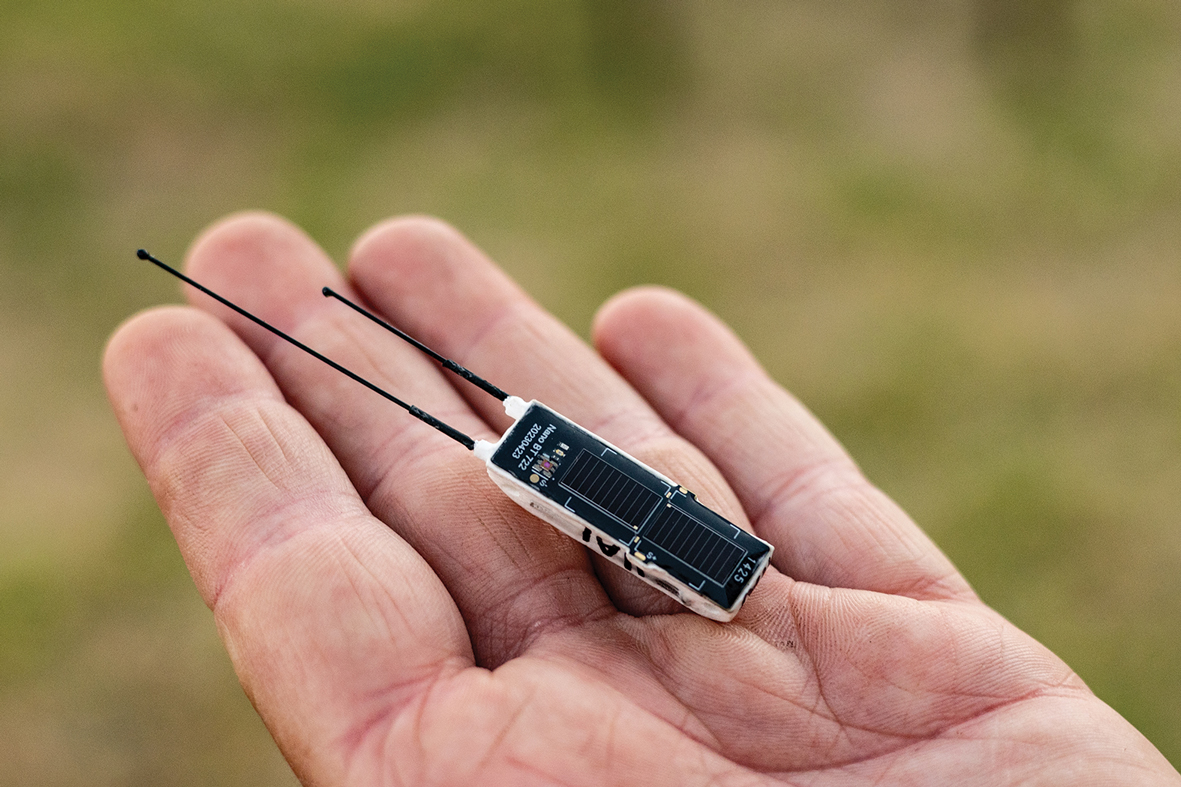
LITTLE black trackers that look like tiny mobile phones attached to mutton birds are giving rangers and scientists vital information on the birds foraging patterns while rearing their chicks.
Mutton birds, specifically the sub-species known as short tailed shearwaters, yula or moonbirds, are Australia’s most abundant seabird, many would say the most fascinating and also tasty – they are a traditional food of the Palawa.
An estimated 23 million birds migrate from the northern hemisphere to islands and coastlines in south east Australia, mainly Lutruwita/Tasmania each year. They arrive in late September to breed where they lay a single egg in a burrow they make in sandy coastal soil. Once hatched, the parents take turns returning to sea gathering food which they regurgitate for their growing chick waiting in the burrow. In late April/early May the fattened chicks shed their downy feather and take their first flight on their massive journey.
They remain at sea until they begin breeding at around five to seven years old.
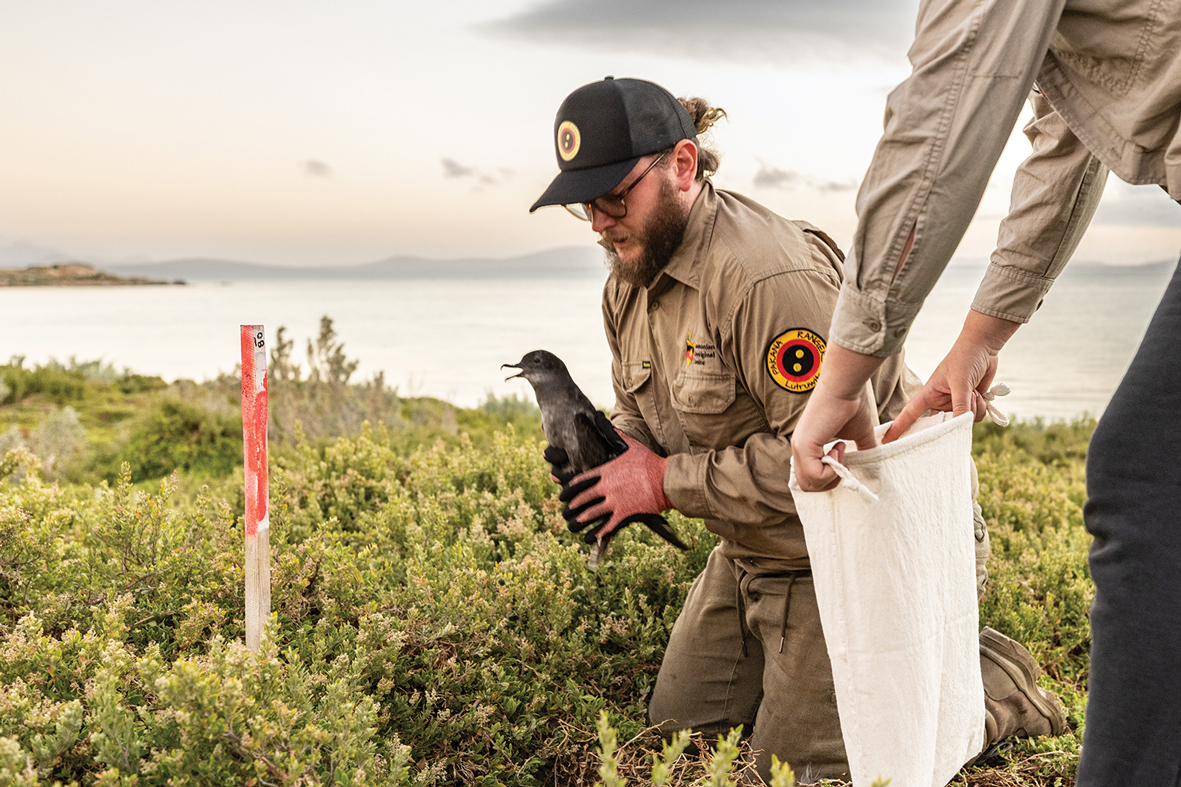
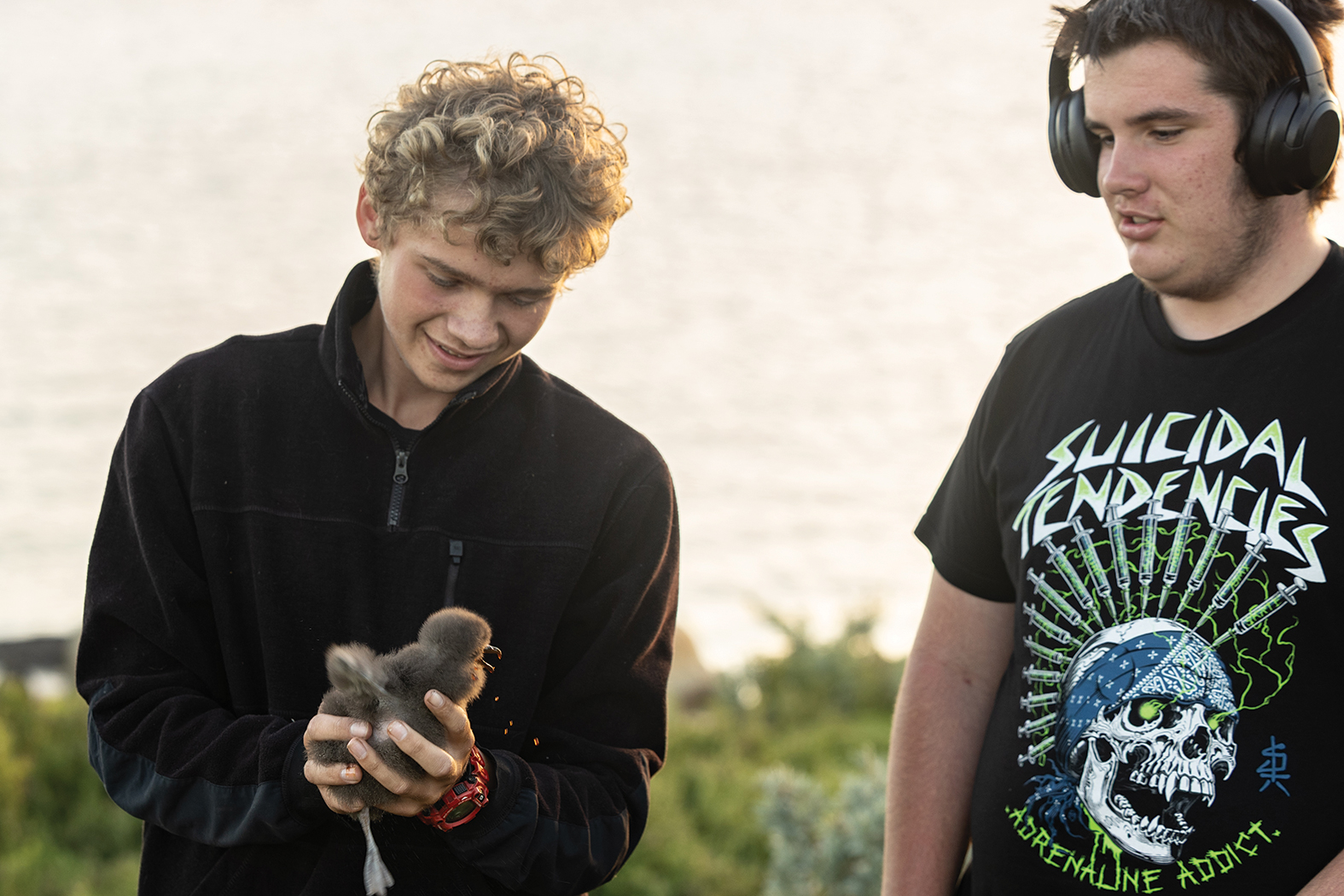
Pakana rangers with a wealth of cultural knowledge and a group of western scientists, who dub themselves some Tasmania’s biggest mutton bird nerds, have been attaching satellite-linked trackers to parent birds for the past two years. The team worked well into the night as birds return at dusk.
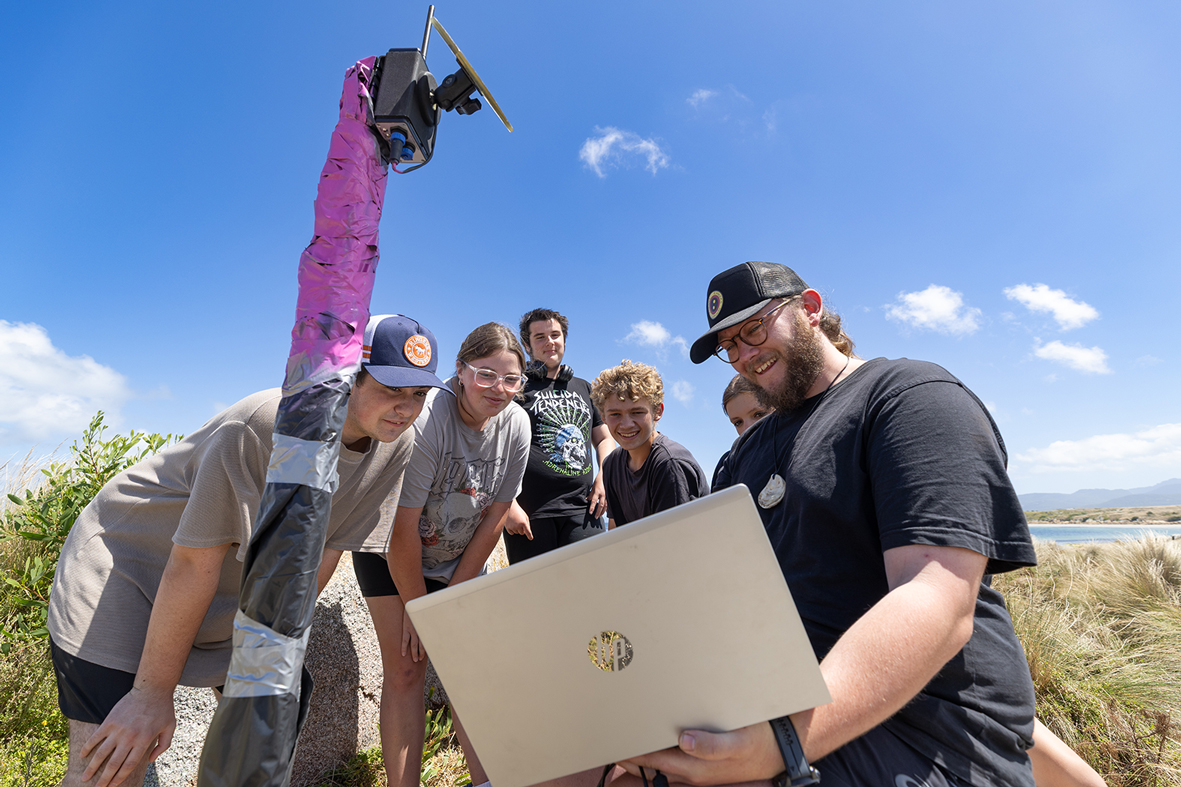
The Koori Mail visited Big Dog Island with the Pakana Junior Rangers recently. Big Dog Island, in Tayaritja/ Furneaux Islands off the north east of Lutruwita, is a mutton bird rookery where Palawa families commercially harvest chicks each year.
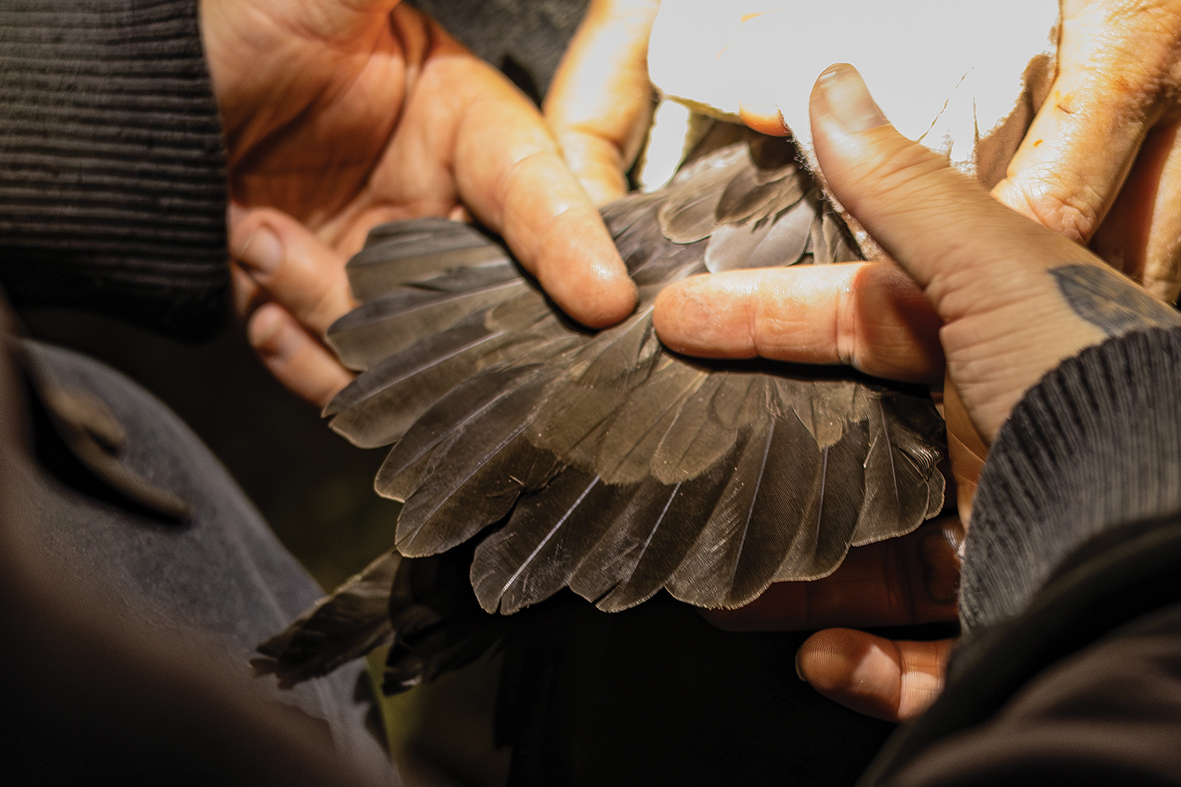
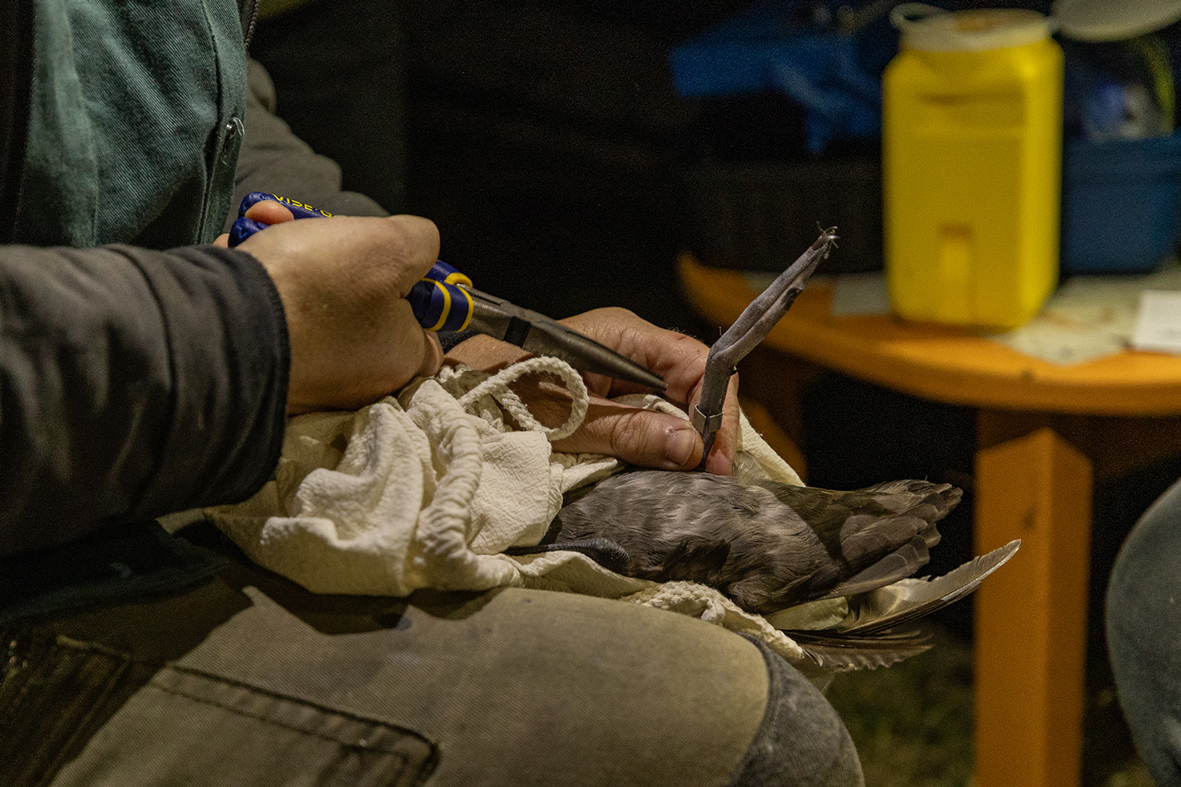
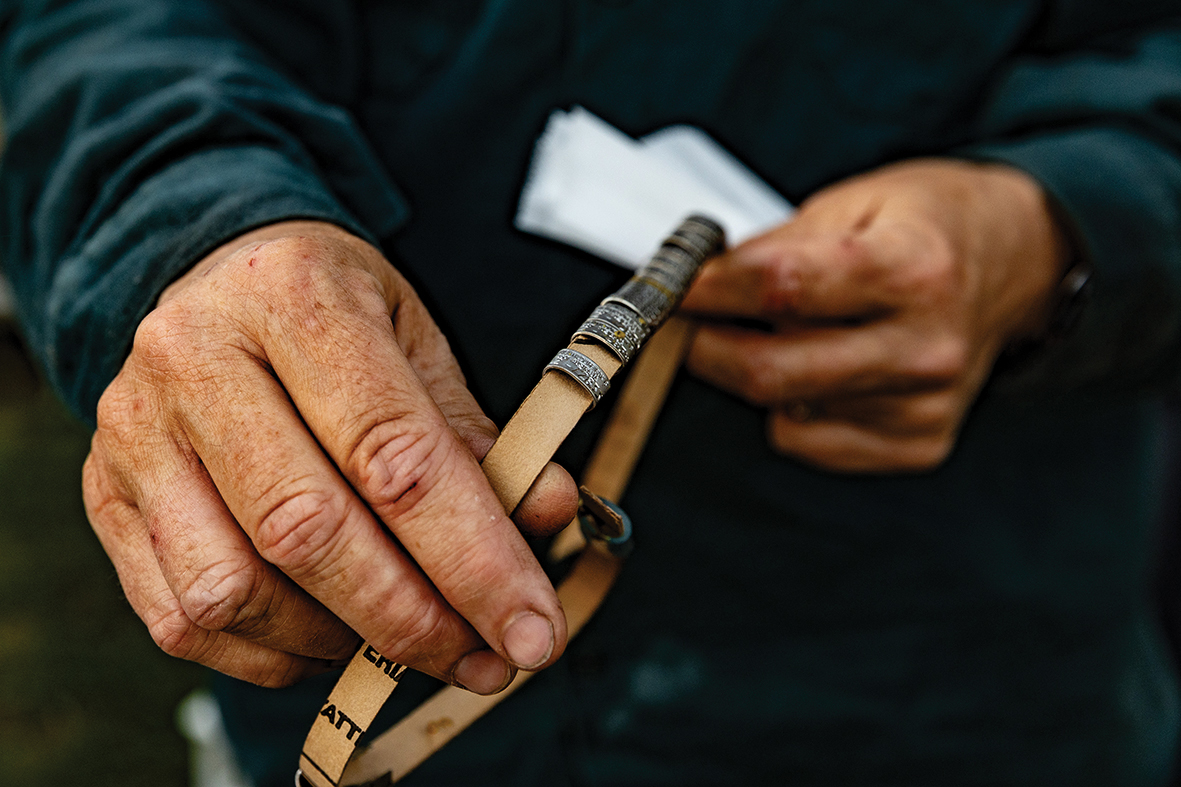
The trackers, which ping their location to a satellite and back to a base receiver in the rookery every 15 minutes, were attached to the middle-two tail feathers of 31 birds this year. A few of the trackers also show the depth they dive to.
The data collected adds to the wealth of amazing facts about the birds – especially where they are feeding in the Southern Ocean.
One particularly quick bird flew from the north east of Lutruwita to Antarctica in less than three days – most take more like a week. Another was recorded diving to 35 metres. Data showed tracked birds predominantly collect food from within the proposed Tayaritja Wukalina Milaythina Muka (Sea Country) Indigenous Protected Area, with parents taking turns making longer trips to Antarctica to replenish on giant krill for days to weeks at a time.
There are multiple threats bearing down on their food sources near and far, including off-shore industrial development and fisheries, fish farming and in Antarctica industrial harvesting of krill and loss of sea ice which algae grows on the bottom of and krill feed on – ie, the base of the food chain. Many other bird and mammal species also rely on the krill.
The ‘mutton bird nerds’ also collected mutton bird poo for DNA analysis to determine their diet, and blood samples were taken to determine the sex of tracked birds.
The burrows of tracked birds are marked with a stake and trackers removed before they migrate north.
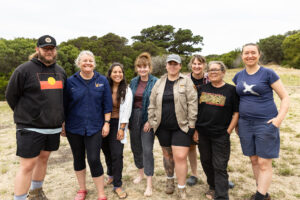
Self confessed ‘mutton bird nerds’ or ‘yula enthusiasts’ Jamie Graham-Blair, Zoe Couzens, Isabella Diaz, Natalie Bool, Alice Wise, Sheryl Hamilton, Fiona Maher and Lauren Roman. Picture Jillian Mundy.
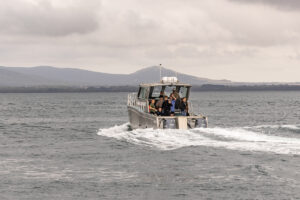
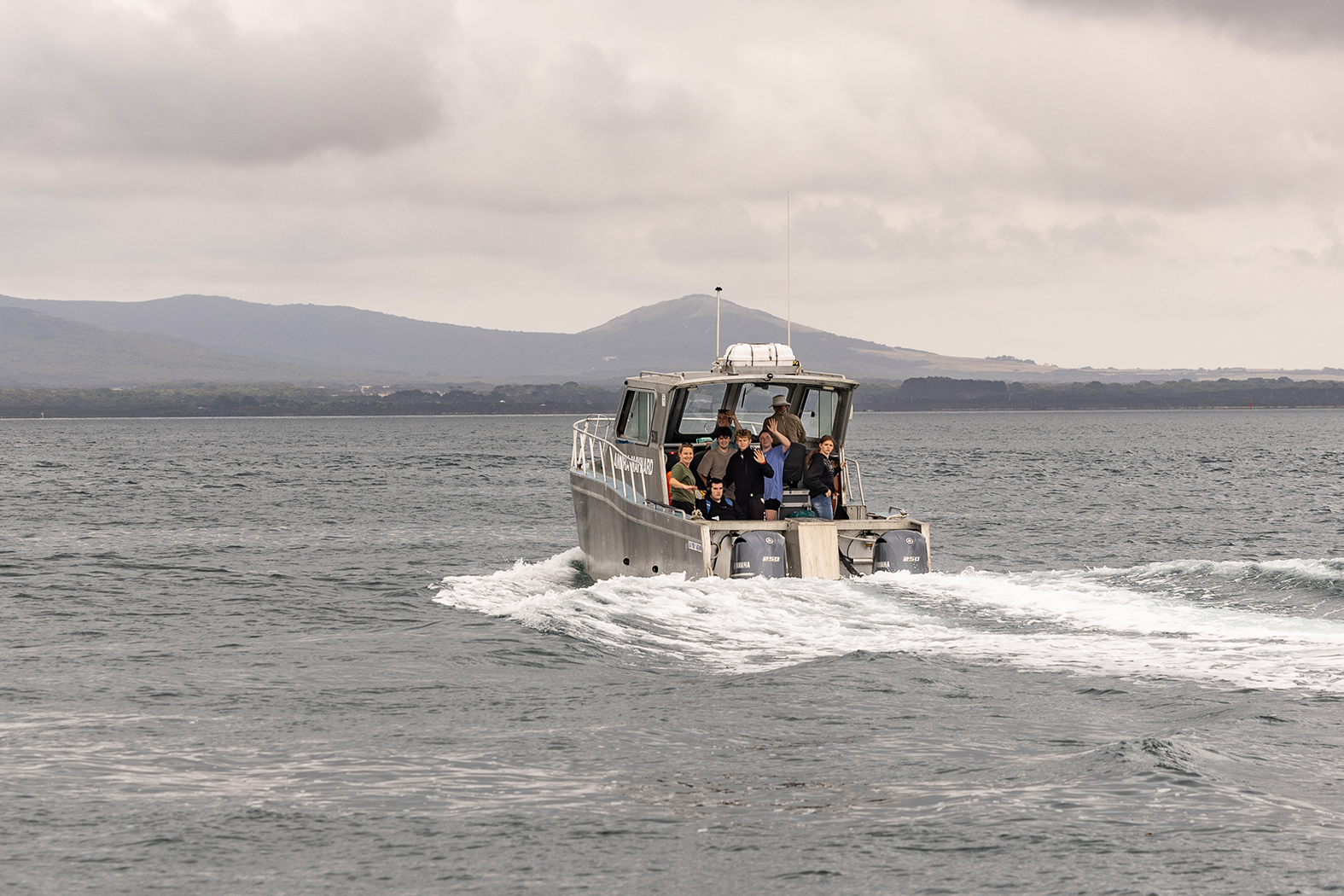
Rangers and researchers travelled to Big Dog aboard the Andra Maynard, named after Aboriginal community boat builder Andrew Maynard. Picture Jillian Mundy.
The tracking project is funded by Marine Parks Australia.