Protecting the ‘mighty Murray’
A WADI WADI Traditional Owner has launched legal action challenging the Victorian government’s approval of a floodplain engineering project at Nyah on the Murray River.
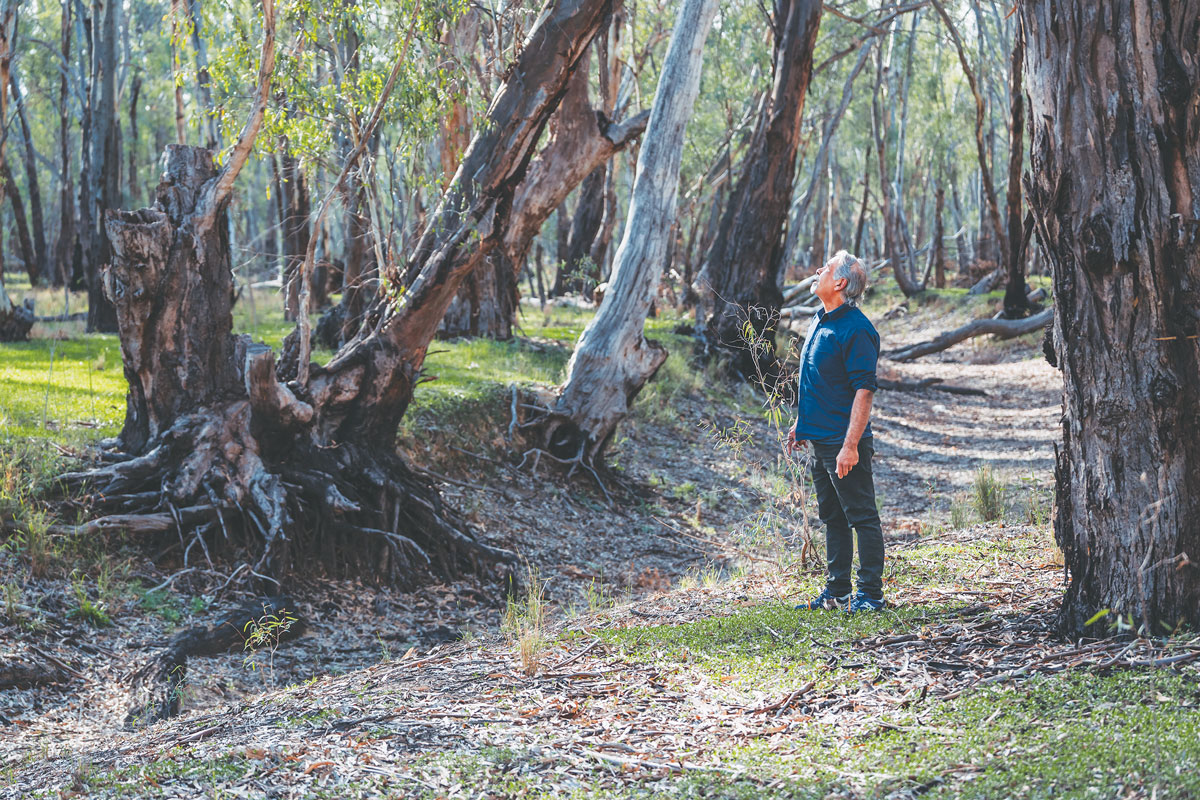
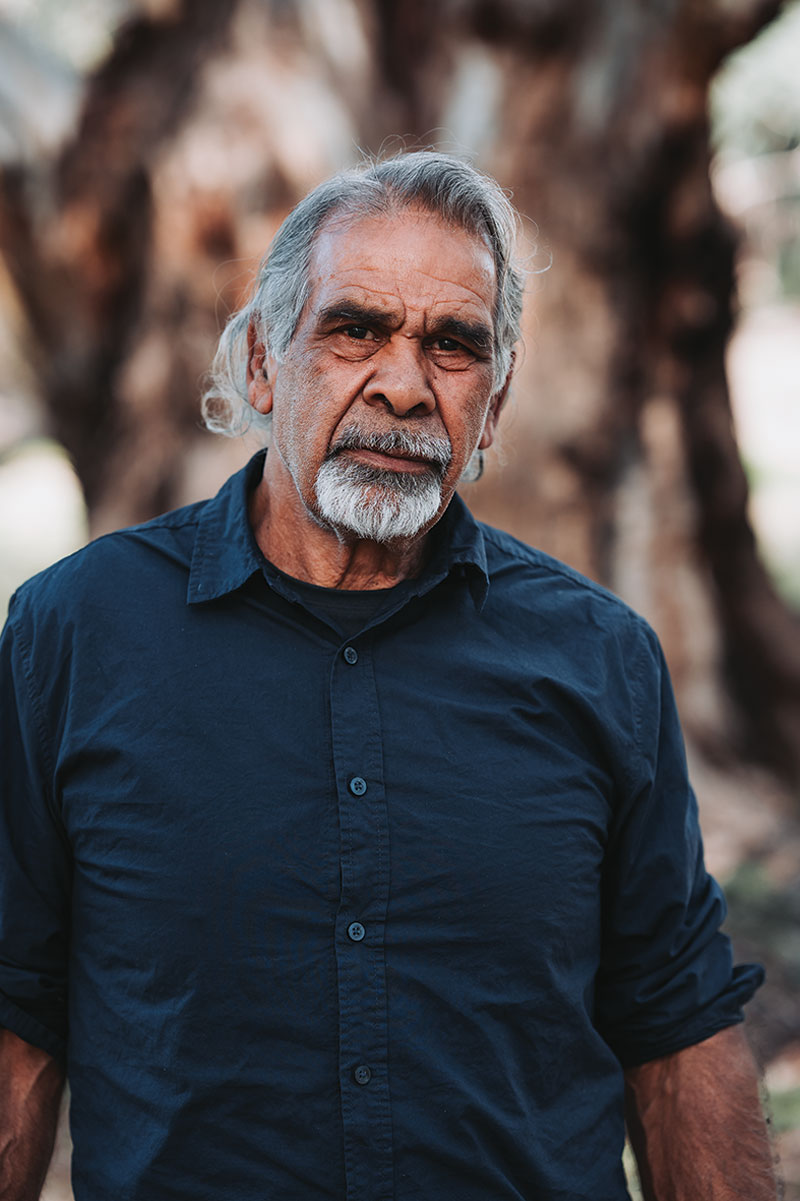
Vince Kirby on the Nyah Floodplain.
A WADI WADI Traditional Owner has launched legal action challenging the Victorian government’s approval of a floodplain engineering project at Nyah on the Murray River.
Works associated with the project are understood to be imminent and, if they proceed, will harm culturally-significant sites and landscapes, including waterways, camping grounds, ancestral burial sites, shell middens, earthen ovens, scar trees, and fish traps.
Traditional Owner Vince Kirby, represented by public interest lawyers at Environmental Justice Australia, will argue that the approval process failed to properly identify, assess and protect Aboriginal cultural heritage and did not involve adequate consultation with Traditional Owners before the plan was approved.
Mr Kirby is seeking to challenge the approval of the management plan for cultural heritage at the site, as he says it allows activities which risk permanent harm to culturally-significant sites and ancestral remains on Country.
He will also argue that the approval process breached requirements under the Aboriginal Heritage Act and failed to properly consider rights protected by human rights legislation.
The project is part of a broader Murray-Darling Basin “water offset” scheme that would use levees, pumps and regulators to divert water to select floodplains, rather than restoring natural river flows.
Mr Kirby said
“the mighty Murray River is my lifeline”.
“That water runs through my veins and it keeps me alive,” Mr Kirby said.
“All the wetlands and creeks keep us alive and keep all our animals, and birds alive and it is the source of our well-being.”
Environmental Justice Australia Lawyer Elke Nicholson said the Nyah floodplain was rich in ancient and living cultural heritage and deserved protection.
“Instead, the government has authorised a construction project that will create permanent and irreversible harm to these places,” Nicholson said. “For a project like this, the government is required to properly consult Traditional Owners and instead, our client says the consultation was cursory and treated his cultural heritage as something that did not meaningfully involve him.”
She said the case is about Mr Kirby’s human rights and his distinct cultural rights as an Aboriginal person to maintain his spiritual relationship to the land and waters of Nyah and to pass on traditional cultural practices to future generations.
Mr Kirby said his grandmother grew up on the Murray River and he now took his great grandchildren there. “I don’t want to take my grandkids to my beautiful rivers and the places we used to camp and have to explain why there is a giant concrete regulator in their river,” Mr Kirby said. “The whole process for approving these projects has shown no respect for my people and they can’t do this project without creating harm to the wetlands, the fish, the wildlife, and the heritage of the Wadi Wadi people.”
The case challenges the Victorian Government’s approval of a Cultural Heritage Management Plan (CHMP) for the Nyah artificial floodplain engineering project. The broader project is part of the Victorian Murray Floodplain Restoration Project and aims to avoid the recovery of environmental water by artificially inundating selected floodplains.
Mr Kirby argues the approval process did not properly assess risks of harm to Aboriginal cultural heritage, including ancestral remains.